 By Marco Hugo Barsotti MHB
Welcome to am1575news, the news bulletin of France24 and Radio Centrale Milan for Monday 07 September 2026 in podcasting, on the medium wave and on franciaoggi.com. In the editorial office in Nice Marco Hugo Barsotti, from Paris Rachel Costa.
News from France
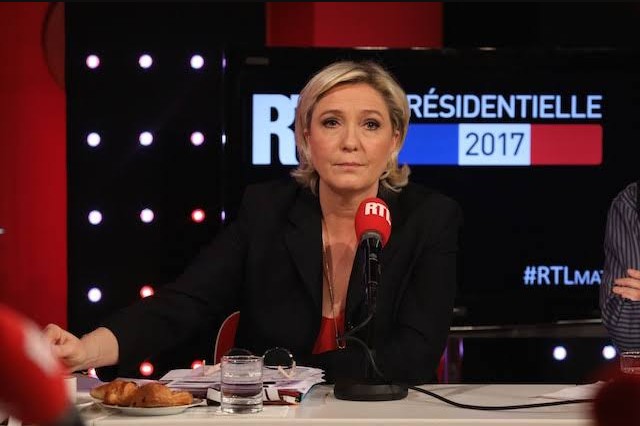
Marine Le Pen wants to “freeze” tobacco taxes and unlink the price from inflation
In an open letter sent Sunday 6 September to tobacconists, the Rassemblement National candidate proposed to block tax increases on tobacco, defining the sector “vital for the social life” of municipalities. The proposal foresees a “tax freeze” and the “de‑indexation” of prices from inflationary rises, with the aim of curbing the fiscal escalation that, in her view, penalises local traders.
Le Pen emphasized that the permanent increase in tobacco price cannot alone be considered an effective public policy. In addition to the tax block, the RN leader intends to tighten sanctions against traffickers and “under‑the‑counter” sales, granting greater seizure powers to municipal police to combat the illegal market.
According to a customs report published in October 2025, the share of tobacco consumed in metropolitan France that escapes national taxation – the TAFE – resulted in a loss of about €4.3 billion in 2023. A Senate investigation from May 2024 also showed that, for a pack of 20 “premium” cigarettes sold for €12.50, the State collected €10.50 (tax plus VAT), while the tobacconist and the producer each earned barely €1 in margin.
The tobacconists’ confederation, which launched a national mobilization starting Monday to defend local shops and territories from price hikes and the proliferation of the paralyzed market, welcomed the proposal as “entirely legitimate”, promising to support authorities in the fight against smuggling.
Source: BFMTV, 7 September 2026
Fact Check by Gemma4.
Bruno Le Maire defines the AfD as an openly neo‑Nazi party and warns of the danger for Europe
French Economy Minister Bruno Le Maire was the first guest on the “Le Grand Enjeu” programme on franceinfo on Sunday 6 September, where he commented on the surprising victory of the German far‑right party Alternative für Deutschland (AfD) in the regional elections in Saxony‑Anhalt, where the party recorded 44.5 % of the vote.
Le Maire recalled having been in Germany the day before, in Berlin, where he met Chancellor Olaf Scholz and numerous entrepreneurs. “If the results hold, it is sad news for Germany and unsettling for the whole of Europe,” he said, highlighting the risk of the continent fragmenting towards nationalist formations.
According to the minister, the AfD threat does not stop at Germany, but extends to right‑wing movements in Austria, Sweden, Finland and elsewhere. “The AfD is objectively, authentically, openly neo‑Nazi,” he declared, adding that Europe is forgetting its past and risks replicating past violence and xenophobia.
Facing this situation, Le Maire proposes a “federation of nation‑states” composed of six countries (Germany, France, Italy, Spain, Poland and the Netherlands), considered more capable of acting swiftly on fiscal and industrial policies to create jobs and counter Chinese competition. He also defended the use of protectionist measures, such as tariffs and European content in products, to save employment, citing the loss of about 50 000 jobs expected in the region.
The minister finally reiterated that protectionism is not taboo and that a deeper integration of the European Union should occur with a limited number of states, because “with 27 it doesn’t work”. He concluded by stressing the importance of strong control of migration flows, considered a source of frustration for voters.
Source: Franceinfo, 06/09/2026
Fact Check by Gemma4.

Rachel’s Editorial – “Bruno le Maire and his survival manual for a tilted Europe”
I will now read you my editorial of today.
French Economy Minister, on the “Le Grand Enjeu” episode, seems to have swapped television for a courtroom: “the AfD is openly neo‑Nazi”. But who, besides Le Maire, has the right to decree the monster? And why does European history immediately forget that extremists have always worn the coat of the “people’s defender”, not that of the “fairy‑tale villain”?
Then comes his brilliant plan of a “six‑state federation” – no longer 27, because “it doesn’t work”. Such a bold proposal that only a former minister, used to making dangerous fiscal forecasts, can believe that reducing the Union to an elite club of six countries is the escape route from failure. But if the problem is that “we can’t deliver prosperity”, why not try to give… something more real before rewriting the geographic map?
What strikes is his penchant for labels: “neo‑Nazi” is the rallying word, yet Germany itself has had protagonists with far deeper roots. French journalism, with its almost religious urgency to expose the “danger”, seems to forget that equating a party with a monster is easier than analysing the structural causes of the crisis. A verbal attack is quicker than a critique of industrial policies, which at least would have some sense.
Finally, the discourse that “protectionism is not a great evil”. Le Maire calls the big‑tech monopoly “a shadow over sovereignty”. It is ironic that our sovereignty purist asks to invest in technology “with others” just as he makes France dependent on American giants whose market caps exceed the national GDP. A sovereignty defined this way is more a Monday dream than a Friday strategy.
Koan of the day
A monk asked the Master: “If a party is defined as neo‑Nazi, who has the power to give that name and what weight does the word have in our reality?”
The Master replied: “The name is an echo of the one who pronounces it; the weight is the silence of those who, fearing judgment, prefer to look elsewhere.”
The monk persisted: “Then, to build a stronger Europe, must we unite few states or admit that true strength is accepting our fragility?”
The Master smiled: “Europe is not a fortress nor a collection of bricks; it is a swinging bridge, and true courage lies in learning to walk on water without sinking.”
But let’s return to the news.
A 4,500 m² area to taste world cuisines to the beat of Cerrone: the Big Mamma group unveils the fourth edition of the BigFest food festival
For two days, the gastronomic market La Felicità, located in the 13th arrondissement of Paris, will turn into a 4,500 m² stage where historic restaurants, new culinary offerings and musical performances will meet. On 18 and 19 September the fourth edition of BigFest will take place, an event that brings together under one roof renowned chefs, artists and gastronomic institutions.
The program features culinary adventures such as Kodawari Ramen, Au Pied de Cochon, Angelina Paris, Alan Geaam, Julien Dugourd, Le Petit Vendôme and Tang Gourmet, plus an exclusive presence from Mandarin Oriental. The festival’s soundtrack will be curated by celebrated French DJ Cerrone, whose music will accompany guests from lunch through the most dancing night.
According to Paul Cormier, director of La Felicità and events manager for Big Mamma France, the goal of BigFest is not to establish hierarchies among cuisines, but to offer a shared platform to entities that have a history rooted in a plural culinary culture. “Our ambition is to turn BigFest into a stand‑alone event, capable of combining taste, music and spectacle,” he said.
The festival expects around 5,600 visitors, a figure that, while representing a significant audience influx, does not fully capture the economic value generated. Cormier emphasizes that BigFest goes beyond the simple impact of two days of sales: it is a powerful tool for attracting new customers for the Big Mamma group, capable of turning a one‑off event into a visibility lever for the restaurant’s entire annual activity.
BigFest’s business model differs from that of traditional professional fairs: restaurants do not pay for a stand nor bear entry costs. La Felicità provides the space, infrastructure, staff and communication, while participants contribute their know‑how and culinary proposals created specifically for the festival. This synergy allows the construction of a collective experience aimed at the public, rather than a mere commercial showcase.
The festival’s lineup is deliberately eclectic. It moves from the prestigious Au Pied de Cochon and the classic Angelina to more contemporary entities like Kodawari Ramen and Tang Gourmet, creating a mix that aims to democratize access to Paris’s most sought‑after tables. “Our intent is to introduce our cuisine to thousands of people in a single weekend,” Cormier reiterated.
La Felicità, with its 4,500 m², wants to go beyond the image of a simple food market: it aspires to become a destination where eating, drinking, listening to music, attending events and socialising merge into one experience. In this context, the distance between the table and the dance floor is minimised, responding to a broader shift in consumption habits. As Cormier observes, “today people look for a reason to go out, not just a name where to eat or a place to hear music.”
The challenge for the organizers remains to constantly improve the event’s quality before aiming for geographic expansion. “If in a few years someone simply says ‘see you at BigFest in September’, we will truly have achieved our goal,” Paul Cormier concluded.
BFMTV, 6 September 2026
Fact Check by Gemma4.
OpenAI launches GPT‑6 Astra: the new model defined as “general artificial intelligence”
OpenAI unveiled its latest chatbot model, GPT‑6 Astra, in a communication that presents the product as a “general artificial intelligence” (AGI). It is a minor upgrade compared to GPT‑5, which the company had initially named GPT‑5.7, but was renamed GPT‑6 to give greater market impact, especially in response to Anthropic’s recent promotion of the Fable model.
According to OpenAI, Astra surpasses a series of benchmarks, but the validity of these tests has been questioned. In the past the company has been accused of violating test integrity, such as in the case of the o3 model which allegedly passed the FrontierMath benchmark thanks to funded pre‑training. Observers note that many of the benchmarks cited in GPT‑6’s technical sheet are little known or even invented, without providing concrete details on parameters, contextual window size – presumably one million tokens – or query costs.
OpenAI president Greg Brockman stated during a press conference that the model marks “an AGI era”, arguing that “it is not unreasonable to consider that we are already in the AGI era”. The Verge faithfully reported these words. However, Sam Altman, co‑founder of OpenAI, more recently described the concept of AGI as “a very loosely defined term, almost a marketing idea”. This contradiction was also highlighted by the Guardian, which quoted Altman in an interview on the Sources podcast.
At the same time, OpenAI introduced new security measures against cyber attacks on Astra, in response to a series of legal controversies related to alleged cyber crimes by the company. The announcement comes shortly after Anthropic’s criticisms of its own Mythos model, described as “the best hacking tool” from a cybersecurity standpoint.
Analysts suggest that the promotional push behind GPT‑6 Astra is linked to OpenAI’s upcoming initial public offering (IPO). After closing a funding round in early 2026, the company appears to be banking on strong product communication to maintain investor confidence, despite recent exoduses of senior executives.
In summary, OpenAI promotes GPT‑6 Astra as the first AGI model, but the lack of verifiable technical data and the conflicting statements from executives raise doubts about the claim’s actual scope.
Source: Pivot to AI, 4 September 2026
Fact Check by Gemma4.
Welcome to the international news bulletin from FranceToday and Radio Centrale Milan for Monday 07 September 2026 on FranceToday.com in podcasting and on Medium Wave at 1575 kHz.
From Paris, I am Rachel Costa.
AfD historic breakthrough in Saxony‑Anhalt: the German right surpasses 44% of the vote
An unexpected turn in German politics saw the Alternative for Germany (AfD) reach almost 44% of the vote in the Saxony‑Anhalt region, marking the highest result the party has ever achieved since its founding in 2013. The event triggered a wave of alarm across Europe, with analysts fearing a shift towards more nationalist and anti‑immigration policies. Regional leader Ulrich Siegmund celebrated the victory calling it an “economic boom” for the region, although economic experts remain skeptical about the AfD’s actual ability to improve local growth. Reactions from traditional parties have been condemnatory, emphasizing the need to defend democratic values in the European Union.
Eruption of Anak Krakatau volcano halts hundreds of flights in Jakarta
A violent eruption of the Anak Krakatau volcano, located in the Sunda Strait off Jakarta, produced a cloud of ash that forced authorities to suspend flight operations at Jakarta’s international airport. Over 170,000 passengers were stranded, with airlines forced to reschedule or cancel numerous routes. The eruption also raised epidemiological concerns due to fine ash residues, which can damage aircraft engines and pose a public‑health risk. Experts have advised continuous monitoring of volcanic activity, while authorities are assessing emergency measures to mitigate the impact on travelers and regional air commerce.
U.S. bonds face the 4.8% test: fiscal risks rise
The U.S. Treasury market has faced increasing pressure, with 10‑year yields reaching the 4.8% threshold, the highest level in recent years. Economists say the rise is fueled by concerns over federal deficits and public debt, prompting investors to demand higher risk premiums. Meanwhile, the Federal Reserve is preparing to consider a possible tightening of monetary policy, while fiscal uncertainties could affect the stability of global bond markets. Analysts suggest closely monitoring the government’s budget decisions to anticipate further rate movements.
Iran doubles fuel prices for large consumers
The Iranian government, hit by the U.S. naval blockade, announced a 100 % increase in fuel prices for customers consuming more than 110 litres per month, rising from 5,000 to 10,000 toman per litre. The measure, aimed at supporting public finances amid economic sanctions, was accompanied by a call to reduce consumption and incentives for sustainable mobility. Energy experts warned that the hike could exacerbate social tensions and push consumers toward alternative transport, while oil sector companies await an international response. The provision highlights Iran’s growing economic difficulties in confronting external pressures.
Volkswagen announces 100,000 job cuts in global restructuring
German automotive group Volkswagen unveiled an unprecedented restructuring plan, foreseeing the elimination of roughly 100,000 jobs worldwide. The decision follows a series of production cuts and the closure of four plants among its many facilities, aimed at reducing costs and improving profitability in an increasingly competitive automotive market. The German Verdi union expressed strong concern about the social impact of such layoffs, asking the government to intervene to protect workers. Volkswagen stated it is investing in the transition to electric vehicles, but balancing innovation and employment remains a hot topic in European industrial policy.
Space data centers: the four key challenges for Elon Musk
Elon Musk presented his ambition to launch orbiting data centres, a move that could revolutionise how companies handle the computing power needed for artificial intelligence. Experts highlight four main obstacles: launch and installation logistics, reliability of infrastructure in space, data‑transmission costs between ground and orbit, and international regulations on space exploitation. Musk stressed that reduced latency and lower energy demand on Earth are key motivations for the project, but realisation will require public‑private partnerships and advanced technological solutions. If launched, the initiative could accelerate the adoption of more powerful AI models worldwide.
Rogo and Hebbia increase revenues while Claude threatens the financial sector
AI startups Rogo and Hebbia have recorded a significant revenue growth thanks to the increasing adoption of their assistants based on advanced language models. At the same time, the Claude platform, developed by Anthropic, is aiming to penetrate the financial services market, raising concerns among traditional institutions about potential automation of analysis and advisory tasks. Industry analysts predict greater concentration of value in the AI supply chain, with large tech companies poised to dominate the financial segment. Competition between emerging new players and established giants will be decisive in shaping the future of digital finance and the regulation of AI technologies.
U.S. Treasury yields above 4.8%: risk signals for investors
The U.S. Treasury market is experiencing turbulence, with 10‑year yields exceeding 4.8%, a level rare in recent decades. Economists attribute the rise to a mix of expansive fiscal policies, persistent inflation fears, and the prospect of tighter monetary policy by the Federal Reserve. Investors are reassessing their positions, shifting assets toward more defensive holdings, while companies evaluate the impact of higher rates on capital costs. The situation remains delicate, with a need to monitor macro‑economic indicators to anticipate further interest‑rate developments.
Weather Paris, Monaco Monte Carlo and Milan for Monday 07 September 2026
Paris – a day that starts mild and ends hot
The morning in Paris presents a temperature of 21°, felt around 23°, with light winds between 10 and 30 km/h and a few whisps of fog that quickly dissolve. The sky remains predominantly clear, with no rain and a moderate UV index. In the afternoon the thermometer rises to 27°, the breeze intensifies slightly to 15‑35 km/h and the few clouds stay scattered, with no precipitation risk. Sunset brings a slight dip to 25°, but the felt temperature stays high, around 27°, with steady south‑west winds. Night falls to 21°, felt at 23°, the sky stays clear and humidity remains moderate, guaranteeing a dry rest. This evolution was confirmed by expert Régis Crêpet, who emphasizes the stability of the weather throughout the day.
Monaco Monte Carlo – bright sun and rising temperatures
In the morning in Monaco the thermometer reads 28°, feeling higher at 32° due to humidity, while the wind is almost absent with peaks of 10 km/h. The sky is clear and the sun dominates, with no hint of rain. In the afternoon the temperature peaks at 31°, feeling even 39°, and light gusts up to 20 km/h accompany an even brighter sky, still rain‑free. Evening cools to 27°, felt around 30°, with light winds of 10‑20 km/h and a light but non‑threatening cloudiness. Night arrives fresh at 24°, felt at 27°, and the sky remains almost cloudless, ensuring a tranquil sleep. The La Chaîne Météo expert described the afternoon as “very hot” and predictability remains high.
Milan – sultry heat with clear skies and light wind
The Milan day starts with a temperature of 26°, felt at 27°, weak north‑northeast winds of 3 km/h and a clear sky with no rain. During the morning the temperature stays stable around 26‑27°, the sun becomes increasingly present and light winds shift toward east‑southeast, always below 5 km/h. The afternoon marks the day’s high at 33°, felt at 32‑33°, while the wind remains weak but more variable, blowing from east‑southeast at 4‑5 km/h and the humidity feels strong. Sunset brings a slight decrease to 31°, with south‑southeast winds of 3 km/h and still clear skies, with no rain in sight. Night drops to 30°, felt at 30°, with light north‑north‑west winds, leaving a comfortable yet still warm temperature. Expert Daniele Berlusconi of 3BMeteo notes the stability of the air and the persistence of dry conditions all day.
Rachel’s Weather Editorial – The vicious circle of climate change
Is it really a stroke of genius to attribute May’s rain to a gigantic global warming, or better, to say today’s heat confirms that dinosaurs are about to return? Rhetorical questions, of course, but the answer is always the same: “it’s the climate’s fault”, as if it were a always‑ready culprit, better than any newspaper blurb.
And let’s not forget the endless prediction that a light wind is yet another proof of the poles’ thaw, or that a slight cloudiness heralds a new ice age. If we keep pointing the finger at climate change for every whim of nature, we risk turning meteorology into a theatre of the absurd, with audiences applauding every green excuse.
Koan of the day
A monk asked: “What is the true face of the weather today?”
Zhaozhou replied: “The sun shines without shadow, the wind is silent, the sky is a blank page.”
The monk responded: “So the weather is a breath of silence?”
Zhaozhou concluded: “Weather is what never changes, even when everything around it changes.”
And that’s today’s weather.
Sign-off.
Online, on X and Mastodon, on all smart speakers and on medium wave, this is FranciaOggi with Centrale Milano 1575 kilohertz.