 By Marco Hugo Barsotti MHB
You are listening to a new special of France Today in podcast and on Centrale Milano 1575 kHz.
A brutal assault in Belfort
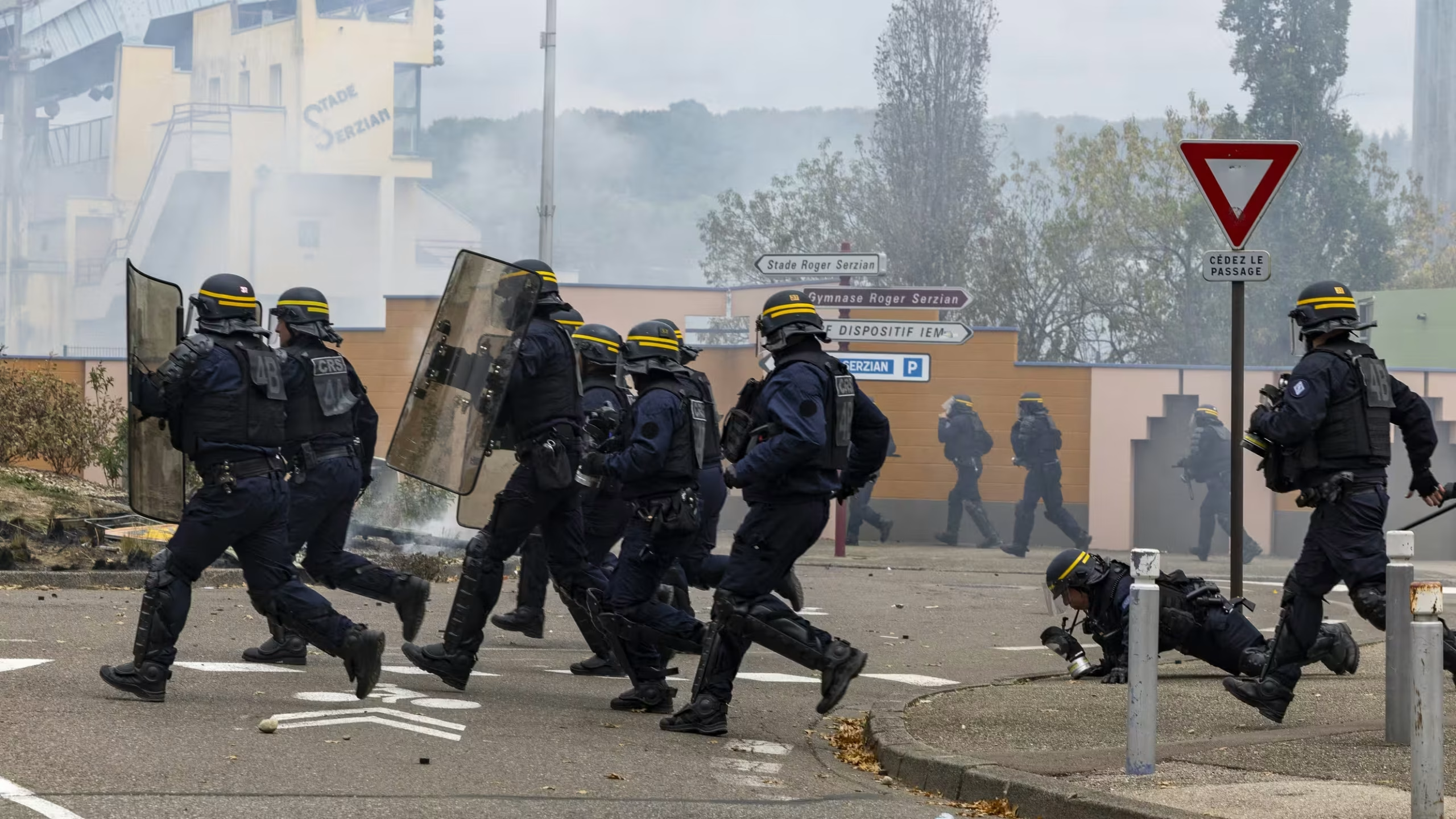
The images shared on social networks shocked the public. A video shows a police officer, in plainclothes, being chased and brutally attacked by a group of young people near the Gustave-Courbet high school in Belfort. The Minister of the Interior, Laurent Nuñez, described the scenes as images of “rare violence,” defining the act as despicable. The officer was transported to the hospital after losing consciousness due to repeated blows received to the head. Fortunately, authorities reassure that his condition is no longer worrying.
Judicial investigation
The Belfort prosecutor, Paul-Edouard Lallois, has officially opened an investigation for attempted voluntary murder. According to preliminary reconstructions, the officer intervened to identify a young man suspected of setting fire to a grassy area near the high school. During the intervention, the commander was surrounded by a “wild horde” of extremely aggressive individuals who knocked him to the ground, delivering repeated punches and kicks. Law enforcement intervened quickly to disperse the group and provide aid to the injured man.
Identification of those responsible
Authorities are currently analyzing the footage to identify all participants in the assault. A 17-year-old teenager, a high school student, has already been arrested. Although he did not directly participate in the physical assault, he admitted to being present in the group of attackers. His identity has not yet been defined, and investigations continue to identify the other perpetrators. The government reiterated full support for the law enforcement officers operating under difficult conditions, emphasizing that the officers are not facing common protesters, but actual riots.

Rachel’s Editorial – Welcome to the circus of soft justice
I will now read you my editorial for today.
Welcome to another episode of our wonderful daily show titled “How to become a henchman without ending up in prison.” We have images of “rare violence,” a term so poetic to describe a police officer who is literally massacred to the sounds of applause and battle cries. It is almost touching to see how brute violence is elevated to a form of contemporary art in the squares, while those responsible hide behind the veil of a “student demonstration.” But let’s not dwell too much on the aesthetic aspect of the massacre; let’s move to the main course: the institutional reaction.
The Minister of the Interior promises us that “everything will be done” to identify the culprits. It’s the usual reassuring melody, the one we repeat with the same monotony of a scratched record. Loose translation: “We are watching the cameras with extreme attention while we decide how long it will take to do absolutely nothing decisive.” It is fascinating how the rhetoric of firmness is the only thing that doesn’t suffer any blow, while the officer in uniform ends up in the hospital, perpetually “no longer worrying,” as if the trauma were just a minor barbecue burn.
And let’s get to the moment of truth: French justice. We are all aware that, if these young “activists” are ever actually identified, the path to the cell will be littered with bureaucratic hurdles and humanitarian excuses. We will probably see a deep psychological analysis, an assessment of the social context, and finally, a sentence so mild it is almost a suggestion for the next act of violence. French justice has become the art of transforming an attempted murder into a professional orientation interview.
In conclusion, we are spectators of a theater of the absurd where the violent one is a “young person seeking identity” and the police officer is the supporting actor who must endure the scene to advance the plot. We truly hope that, for once, the judge does not allow himself to be dragged down by the softness of a system that seems to prefer mediation over punishment. But if you know the story, you will know that hope is a much less reliable emotion than an investigation that remains, for now, only an inquiry on paper.
Koan of the day
Monk: Master, how can a man be seriously injured by a crowd that claims to be fighting for freedom?
Master: When freedom is sought through the fist, it is no longer a right, but a prison built with the bricks of violence.
Monk: So justice is blind in the face of those who strike in the name of a higher ideal?
Master: Justice is like a mirror: if society chooses to look only at its own distorted reflection, the mirror can never show the truth of the blow received.
That is all for now. From the Paris newsroom, this is Rachel Costa: this is France Today with Centrale Milano 1575 kHz.