 By Marco Hugo Barsotti MHB
Welcome to am1575news, the news program of France24 and Radio Centrale Milano for Wednesday, October 07, 2026, in podcasting, on the medium waves and on franciaoggi.com. In the newsroom in Nice: Marco Hugo Barsotti, from Paris: Rachel Costa.
News from France
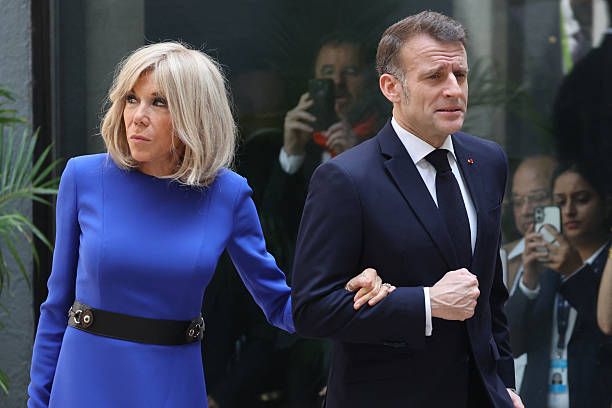
Television controversy over an insulting sign against the Macrons
A news report broadcast during the 1:00 PM news on France 2 sparked a heated debate on social media due to the presence of an offensive sign aimed at President Emmanuel Macron and his wife Brigitte. The scene occurred during a reportage dedicated to the demonstrations shaking several French high schools since the end of September. While journalist Julian Bugier provided details on the student mobilization, a sign held by a high school student appeared on the screen containing a degrading message directed at the presidential couple.
The dissemination of these images during a prime time slot provoked immediate reactions of indignation, particularly from supporters of the Renaissance party. Several users accused the France Télévisions network of lowering the standard of public service, comparing the editorial choice to the quality of content on social networks. Criticisms were directed at both the television network and the journalist for allowing the display of a personal attack against Brigitte Macron.
This controversy is part of a context of strong tensions in high schools, where student mobilization has been accompanied by episodes of violence and vandalism. The Minister of National Education, Édouard Geffray, has already expressed firm condemnation for the fires and assaults on school staff, emphasizing that no demand can justify acts of such gravity. The minister also requested the application of severe sanctions for those responsible and predicted the possibility of providing remote lessons if safety conditions do not allow for the reception of students in school buildings.
Source: France 2, October 6, 2026
Fact Check by Gemma4.
Franco-German agreement to extend the sale of combustion cars beyond 2035
Strict European restrictions on the sale of new internal combustion engine cars by 2035 could undergo a significant relaxation. According to reports from the German daily Handelsblatt, French and German leaders, Emmanuel Macron and Chancellor Friedrich Merz, have reportedly reached an agreement on a common position that goes beyond the concessions already proposed by Brussels. The plan provides for a further reduction of ten points in the effort required of automobile manufacturers to cut carbon dioxide emissions starting from 2035.
The main novelty lies in the fact that these additional ten points of flexibility should not be compensated by the use of low-emission steel, biofuels, or e-fuels. With the existing compensation mechanisms, the emission reduction target could be lowered to at least eighty percent compared to 2021 levels. This evolution would allow manufacturers to maintain a significant share of thermal and hybrid cars in the European market after 2035.
Initially, the European regulation imposed a hundred percent reduction in CO2 emissions by 2035, effectively eliminating the sale of gasoline or diesel vehicles. However, the European Commission has already begun to review this approach, proposing a ninety percent reduction target in December 2025. Under the current Brussels proposal, it was estimated that about ten percent of vehicles sold could still be combustion-powered, benefiting from flexibility mechanisms. The Franco-German agreement could significantly increase this percentage, making the definition of a total ban on thermal engines for 2035 less accurate.
France’s change of position is significant, as only a year ago Paris firmly defended the zero-emissions goal. The new orientation emerges from a strategic compromise with Germany: Paris accepts greater flexibility on thermal engines in exchange for German support for stricter rules on products made in Europe, aimed at protecting local industries from Chinese competition. This exchange occurs in a context of rapid growth in electric car sales, which reached record levels in France and Germany in September 2026.
Source: Handelsblatt, cited in news reports of 2026
Fact Check by Gemma4.

Editorial by Rachel – The great leap… backward into the past
I will now read my editorial for today.
Welcome to another episode of European political theater, where words weigh as much as feathers and promises expire before they are even spoken. Here we have Macron and Merz, in an almost romantic union to save their industries, deciding to perform another acrobatic somersault on emission limits. It is fascinating to observe how the rhetoric of “I absolutely do not want to touch the zero goal” turns into a “let’s just do a bit of cheating” as soon as the manufacturers start to sweat coldly in front of the account books.
The thing that amuses me most is this subtle dance of creative arithmetic. Paris and Berlin want to lower CO2 reduction targets, but not just that: they want to do it without having to compensate with biofuels or low-emission steel. It is the classic example of: “We want to save the planet, but we prefer not to work hard to do it.” It is a sort of diet where you decide to cut calories, but continue to eat dessert because, after all, it is a constitutional right of combustion engines.
And let’s not forget the wonderful game of “quid pro quo.” Paris agrees to make room for thermal engines in exchange for protections against Chinese competition. It is the classic pact between two old friends who shared the last slice of cake while the rest of the table is going up in flames. It is a pragmatism so raw and so honest that it is almost pleasant, if it weren’t for the fact that the truth is sacrificed at the altar of industrial survival. The order of the words is: protect your market, save your jobs, and let’s hope the global thermometer doesn’t heat up too quickly.
In short, we are facing a splendid demonstration of how politics is the art of changing your mind exactly when reality starts knocking at the door. If a year ago France shouted about the danger of a strategic error, today that same France is ready to negotiate a discount on CO2 to keep the factories from deflating. Credibility, in this case, is like an old thermal car: they say it should be retired, but we all know it will keep running as long as there is enough gasoline to fuel the excuses.
Koan of the day
A monk asked the Master: “If we want to save the world from emissions, why do the leaders decide to leave a door open for the engines that create smoke?”
The Master replied: “Because it is easier to close a door that has already been opened, while closing it entirely requires changing the path on which one is walking.”
Then the monk insisted: “But if the path is blocked by smoke, will we never reach our destination?”
The Master smiled and said: “The destination is a point on the map, but the journey is made of compromises; he who seeks to arrive too quickly ends up standing still, discussing the speed of the wind.”
But let’s get back to the news.
The French government struggles to find solutions against student mobilization
The government led by Prime Minister Sébastien Lecornu finds itself in a difficult position in managing the growing anger of high school students in France. The crisis, which erupted at the end of September, saw the closure of numerous schools and violent clashes, which caused hundreds of injuries among police, students, and educational staff.
Internal government sources reveal a certain strategic confusion. While some advisors argue that the executive was caught by surprise by the speed of the protest, others define this thesis as an intellectual forgery. The reality would be that the mobilization exploded abruptly after the Pope’s visit to France, going viral through images of clashes in Saint-Denis. The government initially sought to contain the movement by criticizing the opposition, but the protest proved to be much deeper and more rooted.
The management of the crisis is complicated by the fragmented nature of the students’ demands, who are not represented by structured unions and express different complaints depending on the territory. This lack of clear interlocutors led the government to prioritize security-related responses, a choice also criticized by some supporters of the majority. Critics and opposition accuse the executive of failing to understand the deep roots of youth frustration, fueled by concerns about climate change, artificial intelligence, and post-pandemic difficulties.
Currently, the government is trying to balance the restoration of public order with an opening to dialogue. Acoustic grenades were suspended during the demonstrations, and channels were opened to gather student testimonies. Despite the tensions, some government officials hope that the situation will defuse with the start of the All Saints’ Day school holidays. At the same time, the political outcome of this crisis is monitored with concern, as street disorder risks favoring support for the radical right.
Source: franceinfo
Fact Check by Gemma4.
Welcome to the international news from FranciaOggi and Radio Centrale Milano for Wednesday, October 07, 2026, on FranciaOggi.com in podcasting and on Onde Medie on 1575 kHz.
From Paris, Rachel Costa.
Social tensions in France due to student protests
The French government finds itself managing a situation of serious social tension after more than two hundred thousand students took to the streets to protest against education policies. The Minister of the Interior, Laurent Nuñez, described the movement as an unprecedented event that quickly degenerated into serious episodes of violence, leading authorities to intensify security monitoring in schools.
In response to the anger of young people, the Prime Minister proposed a dialogue plan that includes half-days dedicated to discussion between students and institutions to express their concerns. However, school administrators’ unions expressed strong skepticism about the feasibility of such meetings, while public opinion remains divided between the defense of the right to protest and demands for public order.
The International Monetary Fund warns France about bond yields
The head of the International Monetary Fund issued a harsh warning to France, emphasizing that the country’s financial situation is no longer sustainable due to the soaring yields of government bonds. Pressure on the markets has increased in a context of growing public deficits, which puts long-term economic stability at risk.
The alarm concerns the government’s ability to simultaneously manage sovereign debt and demands for support for families and businesses in the context of a high energy shock. International analysts describe France’s financial position as fragile, fearing that the combination of high inflation and high interest rates could compromise the confidence of international investors.
A miraculous find after a failed execution attempt in the United States
The United States are shaken by news regarding Christa Pike, a death row inmate who survived a failed execution attempt. The woman, initially declared dead after the application of two lethal injections, regained consciousness and is speaking in the hospital, sparking a heated legal and bioethical debate.
The inmate’s lawyers are preparing for subsequent hearings, while the event raises crucial questions about the effectiveness of capital punishment execution protocols in the United States. The case has attracted international attention for its unprecedented nature and the medical and legal complications resulting from the fact that the inmate is still alive.
The chip market and the giants’ war for artificial intelligence
The technology sector is in ferment due to the race for control over artificial intelligence models and computing infrastructure. Nvidia has entered strongly into the competition to acquire strategic startups, seeking to consolidate its position as a leader in the semiconductor market and cloud services dedicated to artificial intelligence.
Simultaneously, there is strong interest in the creation of platforms that allow small businesses to access underutilized computing servers. This trend indicates a fragmentation of the market in which, in addition to giants like Google and Microsoft, new actors are emerging seeking to democratize access to the computing power necessary to train advanced models.
New challenges for the automotive sector and the used vehicle market
The automotive sector is going through a complex transition phase, characterized by the presentation of new electric models by Jaguar, which seeks to redefine its identity after a much-discussed rebranding. The brand is focusing on high-tech vehicles to counter the brand image that faced criticism for recent marketing choices.
Parallelly, the used vehicle market is recording a drop in prices in the third quarter, while demand shifts toward more energy-efficient cars. Consumers, driven by rising fuel costs, are reviewing their purchasing habits, influencing the sales strategies of major dealers globally.
Conflict in the Middle East: three years of pain and division
The world is observing the third anniversary of the terrorist attacks of October 7, a moment that deeply marked world geopolitics. New investigations show a growing erosion of trust between Israelis and Palestinians, with the population struggling to imagine a future peaceful coexistence in a context of devastation and mourning.
In Gaza, the situation remains critical with thousands of victims and a population trapped among the ruins. The international debate now focuses on the possibility of a two-state solution, a perspective that many observers consider increasingly difficult to achieve due to the radicalization of the fronts and the deep internal division within the communities affected by the conflict.
Artificial intelligence under the lens of regulators and national security
United States security authorities are closely monitoring trading platforms with links to China, identifying them as a national security risk. These concerns are part of a broader framework of oversight on emerging technologies, where the risk of industrial espionage and the theft of technological secrets are priorities.
In the private sector, technology companies are facing internal challenges related to the integration of artificial intelligence. Some large corporations have announced staff cuts and cost revisions for artificial intelligence services, seeking to balance the technological boom with the need to maintain profitability and the data security of customers.
Weather for Paris, Monaco Monte Carlo and Milan for Wednesday, October 07, 2026
Paris: intense rains and overcast skies
The day in Paris opens under a decidedly gloomy and heavily overcast sky. The early morning hours are already marked by heavy rains that persist continuously. The afternoon offers no significant improvement, maintaining a humid and gray atmosphere typical of the first days of October. Toward evening, precipitation continues to fall on the French capital, making protection necessary for outdoor movements. During the night, the sky will remain overcast with persistent rains. Temperatures fluctuate between a minimum of 15 and a maximum of 18. The wind blows at 15 km/h with gusts that can reach 35 km/h, making the perceived temperature colder. The risk of rain is extremely high, standing at 90%. Expert Régis Crêpet confirms a day characterized by marked instability.
Monaco Monte Carlo: cloudiness and light rains
In Monaco, the day begins with a very cloudy and overcast sky that accompanies the early morning. During the early morning hours, several showers occur that tend to persist throughout the day. In the afternoon, the situation remains stable, with clouds covering much of the area and short rains that gradually recede. The evening will see a persistent cloudy sky with brief clearings that fail to clear the atmosphere completely. Even during the night, cloudiness will remain the dominant feature with scattered precipitation. Temperatures are at a minimum of 18 and a maximum of 19. Winds will be light with gusts up to 25 km/h. The risk of rain is very high, reaching 100% in the early hours.
Milan: instability and afternoon rains
In Milan, the morning passes with a progressive increase in cloudiness leading to very cloudy or overcast skies. In the afternoon, low-pressure circulation causes the arrival of light rains that intensify toward the evening. The evening hours will be characterized by more consistent showers, sometimes even with a thunderstorm character, accompanied by a drop in temperature. During the night, precipitation will continue to be frequent, maintaining unstable and humid weather. Temperatures for today will see a minimum of 17 and a maximum of 21. Winds will be light, predominantly from the north-east, with gusts up to 8 km/h. The comment from expert Daniele Berlusconi of 3BMeteo confirms a consistent worsening with showers and a drop in temperature.
Weather Editorial by Rachel — The great theater of meteorological catastrophism
Paris records 18 degrees in early October. Not ever. They are certain, our journalist friends, that this has never happened since the beginning of human history. We, however, are not so sure. Of course, it rains heavily and the sky is gray. But even in Milan, even in the ’70s, a rainy afternoon with showers could happen in October. Was it perhaps already climate warming? No, because back then the word hadn’t been invented yet. To tell the truth, they hadn’t even invented the “ozone hole” with which they have afflicted us for years — a hole that seems to have completely disappeared now. Ah, the art of the sensationalist headline. And of terrorizing readers for every drop of rain out of season. And meanwhile, they, the big newspapers, are losing readers and digital subscribers every day because people have realized that the climate is simply… the weather changing. Enough with the alarms every time a cloud darks the sun over the Alps or the Seine. It is a meteorological circus to attract clicks while the newsprint of dailies goes down the drain.
Koan of the day
A monk asked: “Why does the rain fall today on Paris and Milan?”
Zhaozhou replied: “Because the sky is too heavy to hold the clouds.”
The monk replied: “But shouldn’t the rain be a blessing or a curse?”
Zhaozhou concluded: “Rain does not know your judgment, it simply limits itself to wetting the ground.”
And this is today’s weather.
Sign-off.
Online, on X and Mastodon, on all smart speakers and on medium wave, this is FranciaOggi with Centrale Milano 1575 kilohertz.
Source: AudioVisione – AM 1575 News