 By Marco Hugo Barsotti MHB
Welcome to am1575news, the news bulletin of France24 and Radio Centrale Milano for Wednesday September 9 2026 in podcasting, on the medium wave and on franciaoggi.com. In the editorial office in Nice Marco Hugo Barsotti, from Paris Rachel Costa.
Albert of Monaco buys a property to renovate for his son Jacques in Les Baux-de-Provence: story of an 11th‑century residence
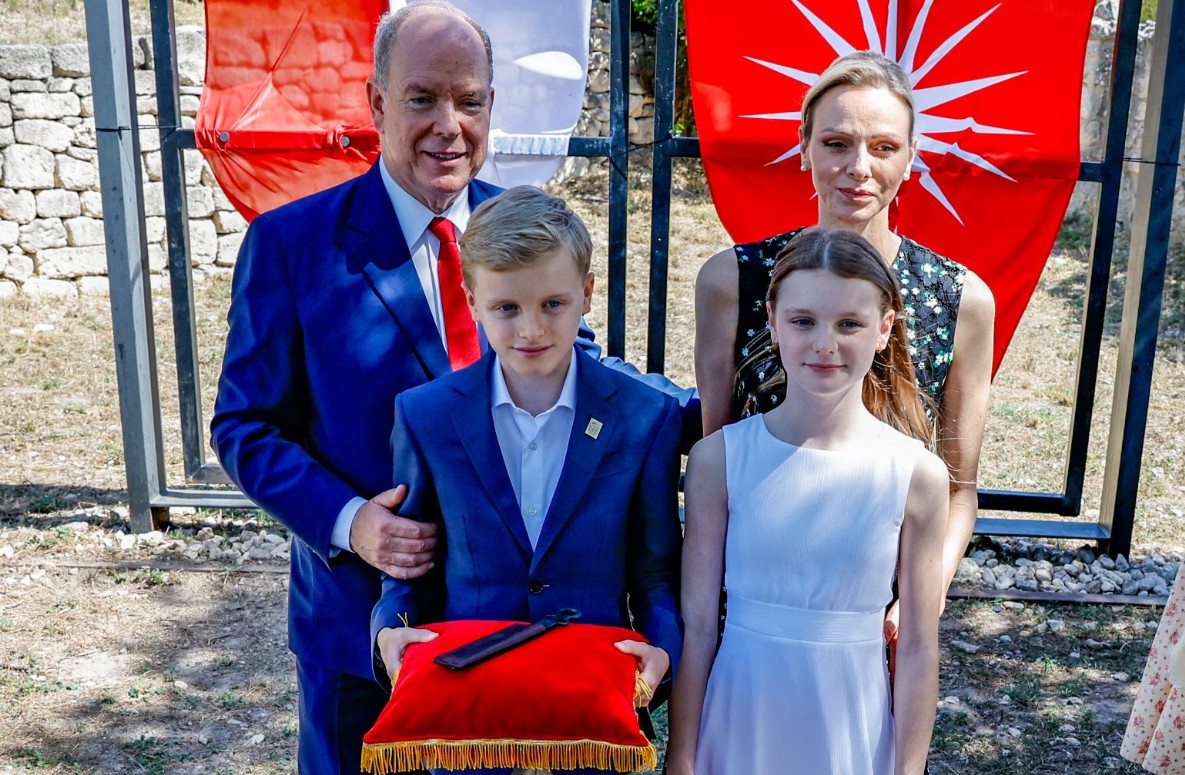
On September 5 2026 the young Prince Jacques of Monaco, 11 years old, received the keys to the city of Les Baux-de-Provence, of which he has held the title of marquis since birth. During the ceremony, Prince Albert II announced that he had purchased for his son a historic Tower, built in the 19th century, located in the heart of the Alpilles and destined to become his residence in France.
The residence, according to historians, dates back to the 11th century and was erected by the Lords of Baux, ancient lords of the territory. In 1426 the lordship of Baux was annexed to the province of Provence and, in 1487, the region passed under the Kingdom of France. Subsequently the fortress was administered by the conniving Anne de Montmorency and fell into disuse from the 17th century onward. In 1630 King Louis XIII granted the marquisate of Les Baux-de-Provence to the Prince of Monaco in exchange for strategic support, thus bringing the property into the history of the Grimaldi.
Today the building is in ruin and requires extensive restoration work. Albert said that the renovation project, which will be launched in the coming months, will represent “the renewed promise of my indissoluble bond with the Baux” and will serve as a “showcase for the entire French network of Grimaldi historic sites”. The prince also emphasized that the donation is not only a tribute to the past, but an opportunity to develop future economic, cultural and heritage collaborations in the region.
Albert’s choice to entrust this heritage to the young heir fits within a tradition of ties between the Grimaldi family and Les Baux-de-Provence, consolidated over centuries of alliances and exchanges between the two houses. The renovation of the building will, according to the prince, symbolize the royal family’s commitment to preserve and enhance the French historic heritage linked to its name.
Gala, 8 September 2026
Fact Check by Gemma4.
News from France
Fuel prices in France continue to rise, hitting new records
The ongoing conflict in the Middle East, fueled by recent attacks between the United States and Iran, has pushed fuel prices to unprecedented levels across France. Wednesday September 9, the average diesel price settled at €2.29 per litre, while unleaded SP95‑E10 gasoline reached €2.12 per litre. The premium SP98 variant also touched the €2.21 per litre mark. These figures, calculated by Radio France from data supplied by more than 4 500 distributors accredited by the Ministry, represent the highest recorded since the start of the conflict. By way of comparison, on February 27, just before the first attacks, the average price of gasoline and diesel hovered around €1.72 per litre. The estimates are based on data from 4 451 diesel stations, 3 603 SP95‑E10 stations and 246 SP98 stations, out of a total of about 9 800 retail points nationwide. Strong pressure on international energy markets, also due to the blockage of the Strait of Hormuz, has reinforced the upward trend, leaving consumers in difficulty. source: franceinfo, 9 September 2026 Fact Check by Gemma4.
Hard for Jordan Bardella to find his footing: the clashes in the RN revival cast doubt on his position
Eight months before the next presidential election, the Rassemblement National (RN) has still not shown that it has taken control of its political season. The campaign began with scattered communications on topics such as the public veil ban and a hypothetical Franco‑British migration agreement, feeding doubts about the cohesion of the Le Pen‑Bardella duo.
The RN, leading in the polls, suddenly revived the veil‑ban issue, a proposal long championed by Marine Le Pen but treated more cautiously by Bardella. Deputy Jean‑Philippe Tanguy’s interview pushed the proposal to the centre of debate, raising questions about its practical implementation and constitutionality. The organization has vacillated between fines, referendum or gradual application, but assured that a “veil police” will not be established immediately after the elections.
Meanwhile, the sudden departure of François Durvye, a prominent economic adviser, highlighted a fracture between the more liberal lines promoted by Bardella and Le Pen’s traditional approach. Durvye, a figure close to the patrimonial sector, was dismissed shortly before the major Medef debate, in a context where Le Pen herself said she wanted his exit.
Another point of tension was the symbolic agreement signed by Bardella in Birmingham with Nigel Farage and the Reform UK party, aimed at sending migrants crossing the Channel back to France. The initiative was quickly criticised by presidential opponents, who described it as disadvantageous for France, and Le Pen herself did not give explicit support, despite journalists from “20 Heures” asking about it.
Summer holidays further complicated the situation: Bardella was seen on Instagram alongside his partner, Maria Carolina de Bourbon, in luxury settings, in contrast with the more sober style preferred by Le Pen. An RN deputy commented that “the jet‑set and the displayed‑emptiness are not what our leader loves”. These stylistic divergences have fueled internal debate over Bardella’s position within the presidential duo.
The return of Marion Maréchal, Le Pen’s niece, to the party ranks was interpreted by some observers as an attempt to recentre the campaign around the family clan. According to sources from Libération, Bardella allegedly said “it’s her or it’s me”, although the same statement was denied by Bardella on television, where he insisted that he “does not feel marginalised”.
Despite the tensions, some RN members, including MEP Philippe Olivier, have highlighted the existence of an “extremely fusionary collaboration” between Le Pen and Bardella. Others, such as former deputy Jean‑Yves Le Gallou, have reminded that the role of number two has historically been difficult to manage within the party, citing past episodes of internal exclusion.
On September 13 Bardella will turn 31, celebrating the date at the usual political fair in Hénin‑Beaumont, in the presence of Le Pen. The appointment will likely be the ideal moment to harmonise their messages and overcome the last campaign aches.
franceinfo, 09/09/2026
Fact Check by Gemma4.

Rachel’s Editorial – The RN at the circus, but the trick is gone
I am now reading my editorial of the day.
Franceinfo, with its usual State‑General elegance of political terror, presents the Rassemblement National as a Shakespearean drama in which the young Bardella has lost the script. But let’s try to understand: is it really a case of “poor taking the march” or simply the taste of an editorial office that, like the early TG3, loves to paint the enemy with the brightest colors to make us feel safe?
Then we face a curious mix of “basil” and “caviar”: the party announces a veil ban, a topic repeated a thousand times, as if it were a market novelty, while Bardella snaps photos in luxury locales with his aristocratic companion. Is it perhaps a “counter‑contrary” strategy… or simply proof that the unity between Le Pen and her protégé is a habit more fragile than a red‑lipstick thread? And that ex‑economic adviser exodus? A plot twist that seems more like an attempt to “liberalise” the party than a genuine policy discussion.
The pact with Nigel Farage is the grand finale of a farce that wants to turn the migrant wave into an Instagram “buzz”. An agreement that, although signed on a stage, remains more a political selfie than a concrete proposal. And we, scandal‑hungry viewers, never ask who, in reality, has the power to decide where migrants end up: Parliament, or the RN’s social‑media manager?
Finally, the recurring theme of the “number two” wandering in a sea of purges, memories of Bruno Gollnisch and other legacies of a right that renews itself like a snake’s skin. Is it truly a “fight that approaches”, or just the usual power dance where every step is marked by a ready‑made scandal‑selling line? In the end, if the elections are eight months away, perhaps the most surprising thing is the RN’s ability to reinvent uncertainty as if it were its only real vote.
Koan of the day
A monk asked the Master: “If a party that denounces immigration signs an agreement to send migrants to another State, is it really defending its own citizens or merely shifting the blame?”
The Master replied: “The party is like a fisherman who casts his net on a lake of mirrors: it catches the image of a solution, but the water always remains the same, and the fish keep swimming free.”
The monk insisted: “And if the leader loses himself in luxurious trips while his movement proclaims moral sacrifices, who is the true puppeteer of chaos?”
The Master smiled: “The puppeteer is neither the leader nor the audience, but the will to believe that an expensive suit can mask the absence of a compass. When everyone applauds the suit, the shadow of doubt stays long in the room.”
But let’s get back to the news.
It is necessary to move from haute couture to ready‑to‑wear: why does Europe launch far fewer rockets than the Americans?
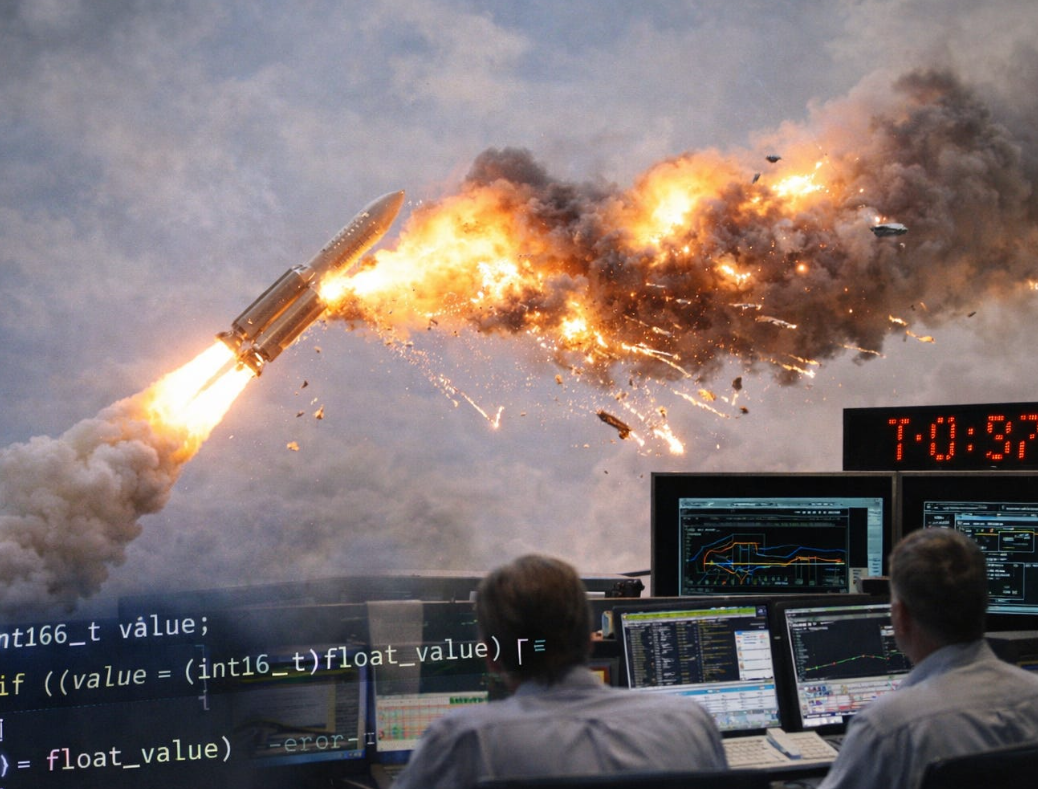
Europe is struggling to keep pace with American competition in the space‑launch sector. In 2025 SpaceX carried out 170 launches in the United States, while the same period saw the European Union put only eight vehicles into orbit. The demand, however, is not lacking: telecommunications constellations such as Starlink or the competitor Amazon Leo, as well as Earth‑observation programmes like Copernicus, require a growing number of satellites.
In his late‑August address to the Financial Times, Joseph Aschbacher, chief executive of the European Space Agency (ESA), warned that the peak in launch requests will occur between 2029 and 2031. If Europe fails to expand its transport capacity, it risks ceding ground to other international actors.
To meet this challenge, ESA launched three years ago a competition aimed at financing emerging space‑sector startups, with the goal of seeing new launchers operational by 2030. “Our goal is to move from haute couture to ready‑to‑wear. A launcher comprises more than 200 000‑300 000 components, 600 suppliers spread across 13 countries: it is a puzzle we must align,” explained Christophe Bruno, CEO of ArianeGroup, responsible for the construction of the great Ariane 6.
Ariane 6, comparable to a large truck with a payload capacity of about 11 tonnes, is inflexible for current needs. To be economically sustainable, the payload must be almost fully filled: with small satellites, such as those of Amazon Leo, the “truck” remains under‑utilised. Europe’s answer is to develop smaller, and if possible reusable, rockets in order to cut costs and increase launch frequency. Besides the traditional launch from the Kourou space centre, platforms in continental Europe are being evaluated, for example at Andøya in Norway.
Four companies are participating in the ESA competition: two German firms, Rocket Factory Augsburg (RFA) and Isar Aerospace, which has just successfully completed its first orbital flight; a Spanish firm, PDL Space; and a French firm, MaiaSpace, which aims for a test flight by 2027, with the objective of making its rocket reusable in the second half of the year.
The issue will be at the centre of the international space summit held in Paris on September 9, where governments and industry will discuss strategies to close the launch‑capacity gap between Europe and the United States.
Franceinfo, 09/09/2026
Fact Check by Gemma4.
Welcome to the international bulletin from FranceToday and Radio Centrale Milano for Wednesday September 9 2026 on FranceToday.com in podcasting and on Medium Wave at 1575 kHz.
From Paris this is Rachel Costa.
The pro‑Kremlin programme of the AfD shakes Saxony‑Anhalt
The German party Alternative for Germany has launched a proposal that includes “remigration” of Ukrainian refugees, a requirement to learn Russian and the revocation of sanctions against Russia. The measure, presented regionally in Saxony‑Anhalt, appears to reflect a new alliance between the German far‑right and Moscow. Political observers fear that the programme could strengthen ties between the right‑wing party and the Russian leadership, creating tensions both nationally and across Europe.
Iran says it has struck US ships in the Strait of Hormuz
The Iranian defence ministry announced that in response to US air attacks, its forces launched missiles at two tankers and a US warship in the Strait of Hormuz. Tehran qualified the actions as a legitimate response to what it calls an illegal occupation of international waters. The escalation alarms energy‑market operators, as the zone is one of the most strategic for global oil transit.
Mistral, the French artificial‑intelligence star, raises €3 billion
The French AI‑focused laboratory has closed a financing round of three billion euros, thanks to support from major industrial groups, including Samsung. With a new valuation of over twenty‑one billion euros, the company aims to strengthen its computing infrastructure and accelerate research on language models. Analysts consider the deal one of the most significant in Europe’s race for technological dominance in artificial intelligence.
The United States and Canada trade tariffs in a commercial war
The US president responded to recent Canadian tariff measures by imposing duties on a range of agricultural, technological and consumer products. Canada, in turn, announced a series of surcharges ranging from 15 % to 50 % on US goods. The two economies, traditionally trading partners, now find themselves in a clash that could reduce bilateral trade and increase costs for consumers in both countries. Experts warn that the dispute could extend to other sectors, including energy and defence.
Oil price nears $100 per barrel
Crude quotations, driven by US‑Iran tensions, have surpassed ninety dollars a barrel, approaching the hundred‑dollar threshold. Market operators fear that further military attacks in the Strait of Hormuz could interrupt deliveries, pushing prices even higher. The rise in oil costs is already affecting stock markets and consumers’ energy bills, fuelling worries of a new wave of global inflation.
Asia’s ultra‑rich are directing their investments toward new frontiers</h
According to an analysis, the wealthiest Chinese citizens are shifting part of their capital toward real‑estate investments and foreign funds, aiming to protect wealth from government restrictions. At the same time, the richest segment of the entire Asian region is diversifying portfolios, focusing on emerging technologies, renewable energy and luxury real‑estate markets. This trend suggests a growing interconnection between Asian wealth and global financial dynamics, with potential impacts on capital markets.
Anthropic closes computing contracts worth $517 billion
The artificial‑intelligence company has signed agreements with computing‑infrastructure providers totaling more than five hundred and seventy‑seven billion dollars in just eleven months. These contracts, intended to boost its language models, represent one of the largest purchases of computing capacity in the sector’s history. The massive capital commitment demonstrates investors’ confidence in Anthropic’s ability to compete globally with other AI giants.
China tightens IPO rules for humanoid robots
Chinese financial regulators have announced that upcoming IPOs of companies specializing in humanoid robots will face stricter scrutiny, following the debut incident of Unitree Robotics. The aim is to curb the proliferation of barely innovative start‑ups and ensure listed companies can demonstrate real technological progress. The new policy could slow growth in China’s robotics sector, but experts believe it may strengthen the credibility of the national stock market.
Meteo Paris, Monaco Monte Carlo and Milan for Wednesday 09 September 2026
Paris – Variable but dry sky, mild temperatures
The morning in Paris presents a light fog and temperatures around 15 °C, west wind at 10 km/h with gusts up to 30 km/h, but no rain at all.
In the afternoon the sun filters through the clouds, raising the temperature to 21 °C, wind picking up to 15 km/h with peaks of 40 km/h, and still no precipitation.
The evening the sky clears further, temperature drops to 18 °C, wind remains moderate at 15 km/h with gusts of 35 km/h and the weather stays dry.
During the night the sky will be almost completely clear, minimum temperature will fall to 13 °C, wind will be almost calm at 5 km/h and there will be no rain.
Overall temperatures will swing between a low of 13 °C and a high of 21 °C for the whole day.
According to expert Régis Crêpet the conditions remain stable and there are no weather alerts in force.
Monaco Monte Carlo – Warm day with occasional showers
In the morning in Monaco the weather is sunny but already beginning to cloud over, temperatures around 25 °C and a strong feeling of heat due to humidity, light north wind at 15 km/h, no precipitation.
In the afternoon the sun is replaced by a very cloudy sky, temperatures reach 28 °C, the heat index climbs to 32 °C, wind rises to 15 km/h with gusts up to 75 km/h and the first light showers appear with a 55 % chance of rain.
In the evening the sky clears halfway, temperature falls to 25 °C, wind eases to 10 km/h and no further showers are expected.
During the night the sky remains very cloudy, temperature stays around 23 °C, wind stays light at 10 km/h and there is no precipitation.
Daytime temperatures vary between a low of 25 °C and a high of 28 °C, with brief rain bursts in the afternoon.
Afternoon wind may become suddenly stronger, but without reaching dangerous limits.
Milan – Uncertain weather, scattered showers and light winds
Morning in Milan is characterised by very dense clouds and some light drizzle, temperatures around 20 °C, north‑northeast wind at 4 km/h and a slight 25 % chance of rain.
In the afternoon clouds remain scattered, temperature rises to 21 °C, wind shifts to east‑northeast at 4 km/h and the chance of rain increases to 35 %, with possible heavier showers late in the afternoon.
Late afternoon, around 18:00, moderate‑intensity rain is recorded, 1.3 mm of precipitation, temperature 22 °C and east wind at 5 km/h.
Evening sees more intense showers, 3 mm of rain around 19:00, temperature dropping to 21 °C, northeast wind at 4 km/h.
During the night the sky becomes clearer, temperature falls to 20 °C, wind is very light at 2‑3 km/h from the northeast and precipitation stops.
Daytime temperatures will vary between a low of 20 °C and a high of 26 °C, with a gentle breeze throughout the day.
According to expert Daniele Berlusconi of 3BMeteo the Atlantic disturbance will bring some showers, but intensity will remain moderate without a weather alert.
Rachel’s Weather Editorial – When the climate becomes guilty of everything
Here we are, measuring clouds, winds and drops of water, but naturally the first thought is: “Will it be blamed on climate change?” Because evidently every weak drizzle or breath of breeze must be attributed to a global catastrophe, otherwise the journalist will have no material for the next apocalyptic broadcast.
Instead of asking whether the sun was shyer or the wind decided to pay a visit, we rush to cite carbon graphs and point fingers at assigning responsibility. How fun it is to turn a normal spring day into an end‑of‑the‑world prophecy: you know it, you expect it, you want it – the weather can no longer be simply variable, it must be the definitive proof of “global warming”.
Koan of the day
A monk asked: “What is the wind today?”
Zhaozhou replied: “It is only a light breeze that brushes the leaves.”
The monk retorted: “Then why do the clouds weep?”
Zhaozhou concluded: “The clouds do not weep, they are only the sky emptying itself.”
And that is today’s weather.
Sign-off.
Online, on X and Mastodon, on all smart speakers and on medium wave, this is FranciaOggi with Centrale Milano 1575 kilohertz.
Source: AudioVisione – AM 1575 News