 By Marco Hugo Barsotti MHB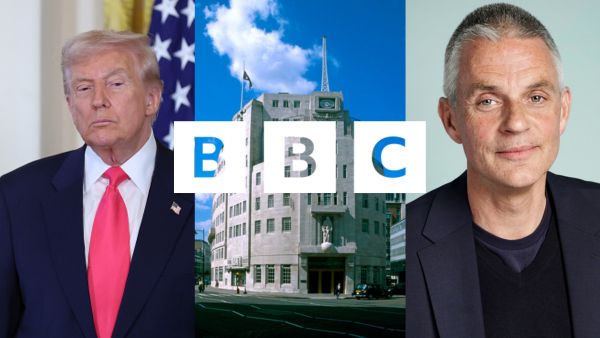
.
The Latest Bombshell: Board Member’s Resignation Exposes Governance Chaos
In a stunning escalation of the BBC’s ongoing crisis, former board member Shumeet Banerji resigned on Friday, November 21, 2025, blasting the corporation’s leadership for mishandling a deepening bias scandal. In a scathing resignation letter shared exclusively with BBC News, Banerji accused BBC chair Samir Shah of excluding him from critical discussions, including a vote of no confidence in news CEO Deborah Turness—ironically, after her own resignation earlier this month. Banerji, a seasoned media executive, claimed he was sidelined from two emergency board meetings triggered by a leaked internal memo that ignited the firestorm over editorial bias. “The board’s actions were taken in the white heat of press excoriation, without reasoned discussion,” Banerji wrote, expressing grave doubts that the recent high-profile exits would restore the BBC’s credibility. Shah countered the claims during a tense appearance before the House of Commons select committee on Monday, insisting he had consulted Banerji via a 26-minute phone call and was “surprised” by the letter’s tone. Committee chair Caroline Dinenage pressed Shah on whether the BBC was in “safe hands,” highlighting insider whispers of a “circular firing squad” within the board. This resignation, coming just weeks after the toppling of two executives, signals not just internal fractures but a profound governance failure at the heart of Britain’s public broadcaster, raising urgent questions about its ability to self-regulate amid relentless scrutiny.
A Month of Upheaval: CEO and Director-General Exit Amid Leaked Bias Revelations
The past four weeks have been a whirlwind of resignations and recriminations at the BBC, capping a year of mounting pressures that exposed deep fissures in its editorial integrity. The catalyst was a leaked internal memo from former adviser Michael Prescott, published by The Daily Telegraph on November 3, 2025, which detailed “serious and systemic” bias in coverage of high-stakes issues like the U.S. election, the Israel-Hamas war, and transgender rights. Prescott, a ex-political editor at The Sunday Times, accused the BBC of “doctored” edits in a Panorama documentary on Donald Trump and suppressing stories deemed hostile to progressive causes.
The memo’s fallout was swift and seismic. On November 9, Director-General Tim Davie—nicknamed “Teflon Tim” for surviving prior scandals—announced his resignation, calling it “entirely my decision” but acknowledging ultimate responsibility for editorial lapses. Just hours later, News CEO Deborah Turness followed suit, stating the Trump controversy had “reached a stage where it is causing damage to the BBC.” Turness, who had led BBC News for three years, insisted the broadcaster was not “institutionally biased” but conceded mistakes had been made. Conservative leader Kemi Badenoch hailed the departures as “right” but warned of a “catalogue of serious failures” running deeper, while Reform UK’s Nigel Farage demanded “wholesale change.” Trump himself celebrated on Truth Social, labeling the executives “very dishonest people” who tried to “step on the scales” of the 2024 election.
Board tensions boiled over as Shah apologized on November 10 for an “error of judgment” in the Trump edit but defended broader operations. Insiders described a “coup-like” atmosphere, with reports of sharp divisions over how to respond to Prescott’s dossier. By mid-November, Trump escalated with a $1-5 billion lawsuit threat, and Ofcom launched probes into editorial standards. These exits, amid a funding review due in 2027, have left the BBC reeling, its reputation as the world’s most trusted news source hanging by a thread.
Unpacking the Bias: Trump’s Doctored Words, Ukraine’s One-Sided Narrative, Israel’s Vilification, and a Litany of Reporting Flaws
At the core of the BBC’s turmoil lies a pattern of alleged impartiality breaches, substantiated by internal reviews, external audits, and journalistic analyses from 2023-2025. While the corporation maintains these are isolated errors, critics—including MPs, regulators, and watchdogs—point to systemic issues that erode public trust. Below, we dissect key examples, drawing on Prescott’s memo, Ofcom rulings, and independent studies.
The Trump Scandal: Editing History to Fit a Narrative
The flashpoint was a October 2024 Panorama episode, aired days before the U.S. election, which spliced Trump’s January 6, 2021, speech to falsely imply he directly incited the Capitol riot. Over an hour apart, clips of “fight like hell” were mashed with calls to march on the Capitol, omitting Trump’s plea to act “peacefully and patriotically.” Prescott labeled it “doctored,” part of nine anti-Trump biases during the 2024 campaign, including over-emphasizing debunked Haitian migrant “pet-eating” claims and using loaded terms like “reproductive rights” without context. A BBC Verify story on car insurance disparities was retracted for “ill-researched” racism implications. Coverage was “more critical” of Trump than Kamala Harris, per Prescott, with migration stories downplayed in push notifications. Trump decried it as “fake news,” threatening billions in damages. Shah’s apology admitted the edit created a “mistaken impression of a direct call for violent action.”
Ukraine War: Pro-Kyiv Tilt and Neglected Russian Perspectives
BBC reporting on Russia’s 2022 invasion has been accused of framing Ukraine as an unblemished victim, aligning with Western elite narratives while sidelining Russian viewpoints—a violation of impartiality norms. A 2024 Leeds University study of 100+ BBC Online articles found dominant “faultless victim” frames, with minimal exploration of Moscow’s security concerns or Donbas complexities. Early misreporting, like attributing Ukrainian sabotages to Russian aggression, went uncorrected for days. Compared to unflinching Russian war crime coverage, Ukrainian actions received softer scrutiny, per eight BBC journalists’ 2023 Al Jazeera letter. A 2023 Cardiff study echoed this, noting over-reliance on Western sources and emotional language for Ukrainian “European” suffering versus detached stats for other conflicts. In 2025, BBC Verify’s mapping of Ukrainian strikes into Russia was praised for accuracy but criticized for underplaying civilian impacts. Critics argue this “indexing” to UK government lines—praising Zelensky while echoing sanctions calls—breeds propaganda over journalism.
Against Israel: Gaza Coverage as a Flashpoint for Anti-Bias Claims
No issue has drawn more fire than the BBC’s Israel-Hamas war reporting, with Prescott’s memo alleging BBC Arabic “minimized Israeli suffering” to portray Israel as aggressor, airing unchecked Hamas claims and featuring antisemitic contributors. A September 2024 Asserson Report, analyzing 9 million words, found 1,500+ impartiality breaches in four months post-October 7, 2023: Israel linked to “genocide” 14x more than Hamas (283 vs. 19), war crimes 4x more (127 vs. 30). CAMERA’s 2025 headline audit showed BBC News fixating on Israeli actions over Hamas atrocities, with Jeremy Bowen’s bylines 50%+ critical of Israel.
Ofcom sanctioned a 2025 Gaza documentary for not disclosing the teen narrator’s father was a Hamas official, ruling it a “serious breach.” Mistranslations in “Gaza: How to Survive a Warzone” rendered “Jews” as “Israelis,” omitting antisemitic slurs like “devils.” Over 100 BBC staff countered in a November 2024 letter, accusing pro-Israel bias: passive language for Palestinian deaths, live-broadcasting Israel’s ICJ defense but not South Africa’s genocide case, and over-reliance on Israeli PR. The 2004 Balen Report on anti-Israel tilt remains secret, fueling cover-up claims. Glastonbury 2025’s unchallenged “Death to the IDF” chants amplified perceptions of leniency toward anti-Israel rhetoric.
Broader Failures: A Catalog of Missteps from 2023-2025
Beyond geopolitics, the BBC’s record is marred by domestic scandals. Huw Edwards’ 2023 arrest for child images led to a six-month pay suspension and guilty plea in 2024. Gary Lineker’s 2023 suspension for anti-asylum policy tweets (and 2025 antisemitism flap) sparked a presenter walkout. Chairman Richard Sharp quit in 2023 over undisclosed Boris Johnson loan facilitation. A 2023 ADHD documentary used a fake patient, breaching ethics. Transgender coverage drew ire: suppressing single-sex space stories and rebuking Martine Croxall for saying “women” over “pregnant people” in 2025. Migrant hotel clips in 2023 aired false benefits claims. Scotland drug deaths were misreported in 2025 (1,339 cited for 2023, actually 2020’s figure). These lapses, per Ofcom, stem from rushed verification and echo-chamber editing, undermining the BBC’s charter mandate.
As the dust settles on November’s resignations, the BBC faces a reckoning: reform or irrelevance. With Shah under fire and a charter renewal looming, can it reclaim its mantle of unbiased truth-telling? The public—footing the £174.50 license fee—deserves answers.