 By Marco Hugo Barsotti MHB
Welcome to am1575news, the news bulletin of France24 and Radio Centrale Milano for Thursday 08 October 2026 in podcasting, on the medium wave and on franciaoggi.com. In the editorial office in Nice Marco Hugo Barsotti, from Paris Rachel Costa.
News from France
Prime Minister Lecornu’s statements: measures for high‑school students, diesel, electricity, agriculture and budget
French Prime Minister Sébastien Lecornu addressed the nation from Matignon last Wednesday, 7 October, in an appearance aimed at responding to several ongoing crises. He first reassured law‑enforcement forces, stating that they have no order to confront high‑school students and must act proportionately in a difficult context. Lecornu then announced that the government will present “first decisions” by the end of the month to tackle the protests of high‑school pupils, after having gathered about 40 000 proposals through a platform open to young people.
On the energy front, the premier announced the release of 10 million barrels of diesel drawn from strategic reserves, made available to distributors at cost price, with the aim of lowering the pump price by 12‑18 cents per litre. He also promised that EDF will have to mobilise its production capacity to the maximum to prevent an electricity‑bill increase during the winter, reiterating the need to respect safety regulations.
Regarding agriculture, Lecornu highlighted the importance of allowing French farms to survive and prepare for the future, announcing new measures that will be introduced the day after the Livestock Summit in Cournon, in coordination with sectoral trade unions.
Finally, he reiterated the goal of bringing the public deficit back to 5 % of GDP by 2027, after the recent overshoot to 5.4 % in 2026, urging Parliament to cooperate for a balanced budget. Source: franceinfo, 7 October 2026 Fact Check by Gemma4.
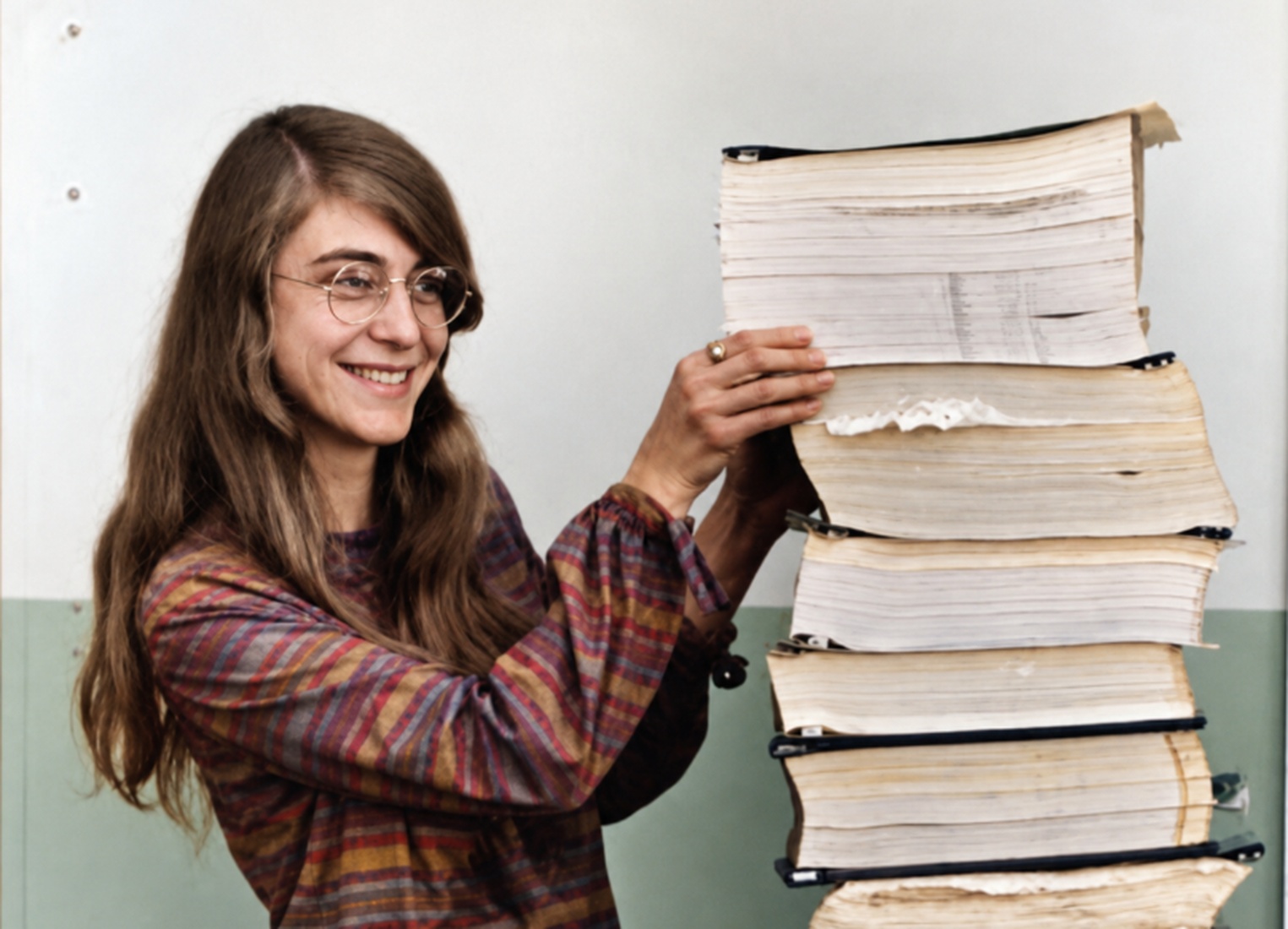
Death of Margaret Hamilton, author of the software that enabled the 1969 Moon landing
Margaret Hamilton, the computing pioneer who helped put man on the Moon, has died at 90. The Massachusetts Institute of Technology announced her passing on 30 September. Hamilton led the team that developed the onboard software for the Apollo missions: a work fundamental to the success of Apollo 11 and to the history of space exploration.
The decisive moment came in July 1969, during the Eagle module’s descent to the lunar surface. The onboard computer was overloaded and began issuing alarms. The software developed by her team succeeded in shutting down secondary activities, giving priority to the operations essential for the landing. The mission was able to continue, allowing Neil Armstrong and Buzz Aldrin to reach the Moon.
Her contribution went beyond the Apollo program. Hamilton advocated for the recognition of software engineering as an autonomous discipline, putting reliability and error prevention at the centre. In 2016 Barack Obama awarded her the Presidential Medal of Freedom. She leaves a legacy that unites computing and space, and a model for generations of women who have chosen science and technology.
«An absolute disgrace»: the offensive banner against Brigitte Macron on France 2’s news broadcast sparks controversy
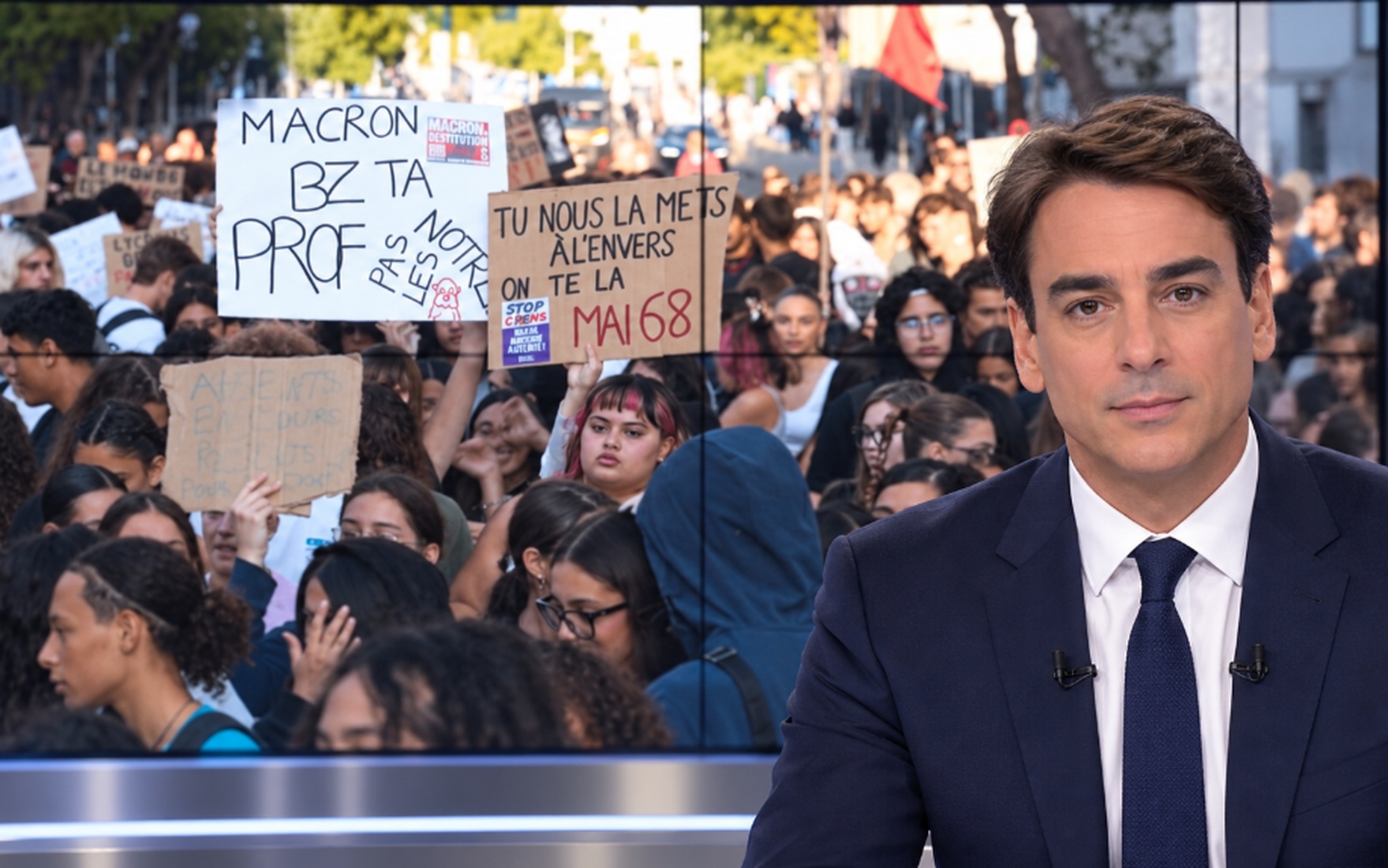
During the 13:00 news programme presented by Julian Bugier on 6 October, a banner held by a student appeared in the background bearing an offensive phrase aimed at President Emmanuel Macron and his wife Brigitte. The message, “Macron bz ta prof, pas les nôtres” (1), was immediately noticed by viewers and triggered a wave of comments on social media, in which supporters of the Renaissance party accused France Télévisions of broadcasting unacceptable content during a peak‑viewing hour.
An insider called the episode a “absolute disgrace by the public service”, stating that public television “has nothing to envy from social‑media trash when it can show such images live”. Another commentator appealed to the network and the journalist, asking why a degrading attack on Brigitte Macron was left on air and recalling the public service’s role in serving young people and their mobilisations.
The controversy occurs amid tension in schools, where recent days have seen fires, fuel‑throwing at teaching staff and a rise in injuries. Education Minister Édouard Geffray strongly condemned these acts, calling them of “extreme gravity” and emphasising that no claim can justify such violence. He also called for the prosecution of those responsible and indicated the possible use of distance teaching if safety conditions do not allow pupils to be received, reiterating that violence must not deprive students of their fundamental right to education. Source: France 24, 6 October 2026 Fact Check by Gemma4.
(*) We asked Gemini to clarify the phrase “Macron bz ta prof, pas les nôtres”.
This is the explanation
Macron, f**** your professor, not ours” (where “bz” stands for baise, a vulgar slang term for the sexual act)

Rachel’s editorial – The French drama billboard on coffee‑break pause
I’m reading you my editorial for today.
So, once again we find ourselves ruminating over the “big scandal” of a billboard that dared insinuate something about Macron and his prehistoric lady Brigitte. But did the whole of France really stop to wonder whether a youngster could say “bz ta prof” on national television? Or is it just another excuse for public‑service journalism that, according to critics, has the “mud” level of comments on X. It is curious how a high‑schooler’s mouth can provoke more clamorous statements than a minister who, with his usual gravity, announces “extreme violences” and “sanctions”.
And then there’s the “everything is absolute”. Someone decided that the spread of a provocative writing equals a personal attack on the First Lady, but where is the “context” of the protest? It is said that young people demonstrate against education policies, while journalists are ready to turn every sign into an epic of hatred. So, let’s ask ourselves: is the media judiciary more concerned with giving space to youngsters or protecting the image of a president who apparently still needs a history professor to remind him of his origins?
Meanwhile Minister Geffray, with his usual round‑table of scripted phrases, reminds everyone that violence is unjustified, but does not seem at all troubled that his voice is used to “defend” students’ rights. It is a bit like telling the wolf not to bite while giving it a bone to chew. And we viewers, meanwhile, keep watching the news, hoping the next episode will give us a new spark of “absolute shame” or, worse, another political mantra to repeat at random on social media.
In conclusion, the real question remains: what really concerns us? The fact that a youngster raised a perceived grievance or that the media, in the name of courtesy, rush to censor the shadow of a sign? Perhaps the answer is simpler than they want us to believe: democracy is a circus, and we are all the clowns who applaud, cry or simply peek at the funny show.
Koan of the day
A monk asked the Master: “If a banner slides across the news screen and offends the president, is the blame on the messenger or the message?”.
The Master replied: “The banner is only a leaf in the wind of a bridge; the true weight is what the reader decides to place on his own shoulders”.
The monk insisted: “Then, how can one stop the wind without breaking the bridge?”.
The Master smiled: “Who tries to stop the wind ends up teaching the bridge to dance, and the bridge says: ‘I do not break, you break me’”.
But let’s get back to the news.
France spends 28 % more per secondary‑school student than the OECD average, yet resource shortages persist
According to OECD data, in 2023 the total spending per secondary‑school student in France amounted to $19,527 in purchasing‑power parity, surpassing the member‑state average by 28 % ($15,288). Public‑sector spending stood at $16,311 (+24 % versus the OECD average), with $16,674 for general‑high‑school students (+34 %) and $15,638 for technical students (+12 %). This places France ninth in the OECD ranking, behind the United States.
Despite this apparent advantage, pupils and teachers report structural shortages. Analyst Eric Charbonnier of the OECD Education Directorate describes the situation as “paradoxical” because of a “poor allocation of spending” that creates “serious disparities between institutions”. He notes that a significant share of high schools are small: 11 % have fewer than 100 students, a factor that raises operating costs. Moreover, France has about 1,200 teaching hours per year, against an OECD average of 1,000, directly impacting teacher‑pay costs.
Charbonnier also highlights the role of associate teachers, who make up one‑third of the high‑school staff: although they receive higher salaries, they work fewer weekly hours (15 hours versus 18 hours for certified teachers), reducing the time available per pupil and prompting the hiring of more staff.
The report further notes that French teachers earn 15‑20 % less than the OECD average after 15 years of experience, a gap that has gone unaddressed for 25 years. Charbonnier proposes re‑orienting spending toward teachers’ salaries to create an “attractiveness shock effect”.
Finally, the analysis warns that OECD international comparisons can be distorted by the public‑sector pension regime. The high employer contribution (82.28 % of civil‑servant wages) inflates education‑spending figures. Adjusting for this, the Public‑Policy Institute estimates that total French education spending would represent 5 % of GDP in 2021, instead of the reported 5.4 %, and that spending per secondary‑school pupil would be €10,334 – about 9.5 % lower than the unadjusted figures. Charbonnier notes that the OECD is working with the European Commission to separate corrected figures from those inflated by pension costs in future reports, raising questions on how to reallocate these funds.
Source: OECD, 2026
Fact Check by Gemma4.
Mistral launches “Le Chonk”, a fully open trillion‑parameter AI model
French company Mistral has unveiled a new artificial‑intelligence model with a trillion parameters, called “Le Chonk”, available for free and customisable by anyone. Currently in preview, the final version will be released by the end of the month. While designed to compete with leading general models, Le Chonk has been optimised for programming, cybersecurity and specific sectors such as manufacturing, finance, electrical engineering and other niches.
Guillaume Lample, co‑founder and chief scientist of Mistral, told WIRED that “there are many areas where other labs do not focus so much; there are so many domains where models can be improved”. The company claims that Le Chonk is by far the most advanced open‑weight model developed outside China and is “very, very close” to certain proprietary models. Unlike Chinese labs, accused by the U.S. government of using distillation to close the performance gap with OpenAI and Anthropic, Mistral says it trained its model from scratch.
The adoption of open‑weight models dramatically reduces costs for businesses, as the price is linked solely to compute consumption. By narrowing the performance gap with the most advanced proprietary models and offering a competitive alternative to those from China, Mistral believes Le Chonk will eliminate the few remaining reasons a company might hesitate to choose open‑source software.
With lower capital and compute resources than OpenAI and Anthropic, Mistral has traditionally lagged competitors in performance, revenue and release frequency. While U.S. labs charge premium fees for access to their closed models, Mistral generates revenue through pay‑as‑you‑go fees for running models on its own cloud and by employing engineers dedicated to optimising models for client needs. Recently, the company experienced a growth phase: in September it closed a $3.3 billion funding round, valuing it at $24 billion – the largest ever for a European tech firm – with earnings multiplied twenty‑fold in the past year. But the most striking figure is another: three years after its debut, Mistral remains the only true artificial intelligence born in Europe. With funds… okay, also American. Source: Wired, 8 October 2026 Fact Check by Gemma4.
Welcome to the international bulletin from FranceToday and Radio Centrale Milano for Thursday 08 October 2026 on FranceToday.com in podcasting and on the Medium Wave at 1575 kHz.
From Paris I am Rachel Costa.
Yemeni Houthi rebels strike Saudi airport in Riyadh, three victims
Yemeni rebel forces launched a series of attacks against Riyadh International Airport, causing three deaths and further damage to infrastructure. The incident, which occurred off the port of Riyadh, demonstrates the intensifying regional conflict and the growing ability of armed groups to hit strategic targets. Saudi authorities have pledged to strengthen the defence of their critical facilities and to respond with more forceful military measures.
French government releases 10 million barrels of diesel to lower pump prices
The French prime minister announced the release of ten million barrels of diesel drawn from strategic reserves, aiming to bring pump prices down by roughly twelve‑eighteen cents per litre. The move, presented as a response to rising fuel inflation, should help consumers and businesses contain operating costs. Market experts note, however, that the effect on the final price will also depend on international oil‑market dynamics.
Trump says he does not want a deal with Iran while the U.S. prepares a massive bombing
The United States president stated that he is not in favour of a treaty with Tehran, while his national‑security team evaluates the possibility of intensifying air operations against Iranian targets. White‑House sources say the United States is planning a series of targeted strikes aimed at weakening Tehran’s nuclear capability. The comment has heightened tensions in the Middle East and raised concerns among Western allies about a possible military escalation.
Oil prices rise due to Middle‑East tensions
Energy markets have recorded a rapid climb in Brent and WTI prices following recent hostilities among regional forces. Uncertainty about the continuity of supplies from the Persian Gulf, a crucial zone for global oil export, has driven investors to seek safer assets, pushing futures contracts further up. Analysts warn that as long as the situation remains unstable, prices could continue to fluctuate in a high‑range zone.
Samsung forecasts record $80 billion profit in Q3 thanks to AI‑chip demand
The South‑Korean conglomerate released an unprecedented earnings forecast, estimating a profit of eighty billion dollars thanks to the explosion of demand for artificial‑intelligence semiconductors. The result reflects the surge in orders from large data‑centres and tech companies that are boosting their services with advanced computing capacity. Analysts predict the growth will continue into the next quarter, cementing Samsung’s position as a leader in high‑performance chip production.
The next step of Nvidia’s $100 billion deal‑making engine
Sector experts’ analysis highlights that Nvidia’s massive ability to close deals exceeding one hundred billion dollars is reshaping the geopolitics of technology hardware. After acquiring numerous start‑ups specialised in AI and visual computing, the company aims to consolidate its leadership in data centres and autonomous‑driving systems. Observers warn that these moves could trigger a new phase of market concentration, with repercussions on pricing and global competition.
Former Trump AI adviser Sriram Krishnan launches $500 million AI investment fund
The technology entrepreneur, who served as an artificial‑intelligence adviser in the White House, has launched a new venture‑capital fund aiming to raise half a billion dollars. The capital will be allocated to U.S. start‑ups operating in national‑security, cyber‑defence and commercial AI applications. Krishnan said the fund intends to bridge the financing gap between innovative small firms and large institutional investors.
Weather Paris, Monaco Monte Carlo and Milan for Thursday 08 October 2026
Paris – autumnal freshness and rippled winds
The morning presents gusts up to 50 km/h, temperatures around 13 °C and a light drizzle with a 45 % chance, according to expert Régis Crêpet.
In the afternoon the sky clears, temperature rises to 16 °C, wind calms to 20 km/h with gusts of 45 km/h, and precipitation is almost absent.
Late afternoon clouds drop to 12 °C, wind eases to 15 km/h and rain risk falls to 25 %.
Evening feels calm at 9 °C, wind is light, below 20 km/h, and the sky becomes almost clear.
During the night the cold sinks to 9 °C, wind further drops, and a clear sky remains until dawn.
Daily minimum temperatures hover around 9 °C, highs reach 16 °C, with winds variable but always under 50 km/h.
Monaco Monte Carlo – friendly sunshine and Mediterranean breezes
At sunrise the temperature is 18 °C, wind is calm with gusts of 20 km/h and the sky is half‑cloudy, with a 45 % chance of rain.
Shortly after, around 9 a.m., the thermometer reads 17 °C, wind slightly stronger at 15 km/h and the sky opens up a bit.
Mid‑day the sun dominates at 24 °C, moderate winds of 20 km/h with gusts up to 40 km/h, no rain at all.
Afternoon drops to 20 °C, sky becomes cloudier, wind blows at 15 km/h with gusts of 35 km/h, and rain probability rises to 35 %.
Evening temperature returns to 18 °C, wind increases to 20 km/h with gusts of 35 km/h, while the sky gradually fills with clouds.
Temperatures swing between a low of 17 °C in the morning and a high of 24 °C at noon, with winds not exceeding 40 km/h gusts.
Milan – relentless rain and mild temperatures
The day starts cloudy at 16 °C, wind almost still and a slight rain chance of 25 % according to expert Daniele Berlusconi of 3BMeteo.
At eight the rain begins lightly, 0.4 mm, with a gentle southeast breeze of 2 km/h, and temperature stays around 16 °C.
Around eight‑thirty rain continues, 0.5 mm, and wind remains calm, keeping temperature at 16 °C.
In the afternoon, between 10 and 14, the sky is clearer, temperatures rise to 19 °C, wind stays weak around 2‑3 km/h.
Late afternoon and evening precipitation intensifies: thunderstorms with 7 mm at 18, showers of 3 mm at 19, and further rain up to 1.5 mm at 20, with winds of just 2‑3 km/h.
During the evening the temperature drops to 16 °C, sky stays overcast and rain lightens.
The day records a minimum of 16 °C, a maximum of 19 °C, weak winds, and a total accumulation of about 15 mm of rain.
Rachel’s Weather Editorial – Autumn warmth, ecological excuses and spectacular memories
Paris peaks at 16 °C, with winds that have gusted to 50 km/h. It is not a sign of a new eternal freeze, it is just October.
Many journalists would scream “climate change” for this brisk breeze, but in the 1970s Paris saw rain and similar winds without anyone inventing the word “climatic”.
Monaco shows 24 °C under an almost clear sky, yet the press rushes to link Mediterranean sunshine to a global threat, forgetting that in the 1980s Europe already experienced “normal” heat waves.
In Milan, 15 mm of rain – a total that the ozone‑hole era would have called an “exceptional event”, now that the hole has almost disappeared.
Yet today sensational headlines like “Here is the alarm of the century” are sold, while readers drift to social feeds, and major dailies see subscriptions drop like October temperatures.
The result? More hype, less real attention. A vicious circle of empty alerts, where autumn is just autumn and not the new end‑of‑the‑world sign.
Koan of the day
A monk asked: “What is the true face of time today?”
Zhaozhou answered: “The wind blowing in Paris, the clouds dancing in Monaco, the rain falling in Milan.”.
A monk asked: “Is it change or continuity?”
Zhaozhou answered: “Change is the name we give to the usual, continuity is the reality we forget.”.
A monk asked: “Then, what lesson does the sky bring us?”
Zhaozhou concluded: “That every day is a circle, not a broken line.”.
And that is today’s weather.
Sign-off.
Online, on X and Mastodon, on all smart speakers and on medium wave, this is FranciaOggi with Centrale Milano 1575 kilohertz.
Source: AudioVisione – AM 1575 News