 By Marco Hugo Barsotti MHB
You are listening to a new special from am1575news, Francia24 and Radio Centrale Milano, in podcasting and on medium waves.
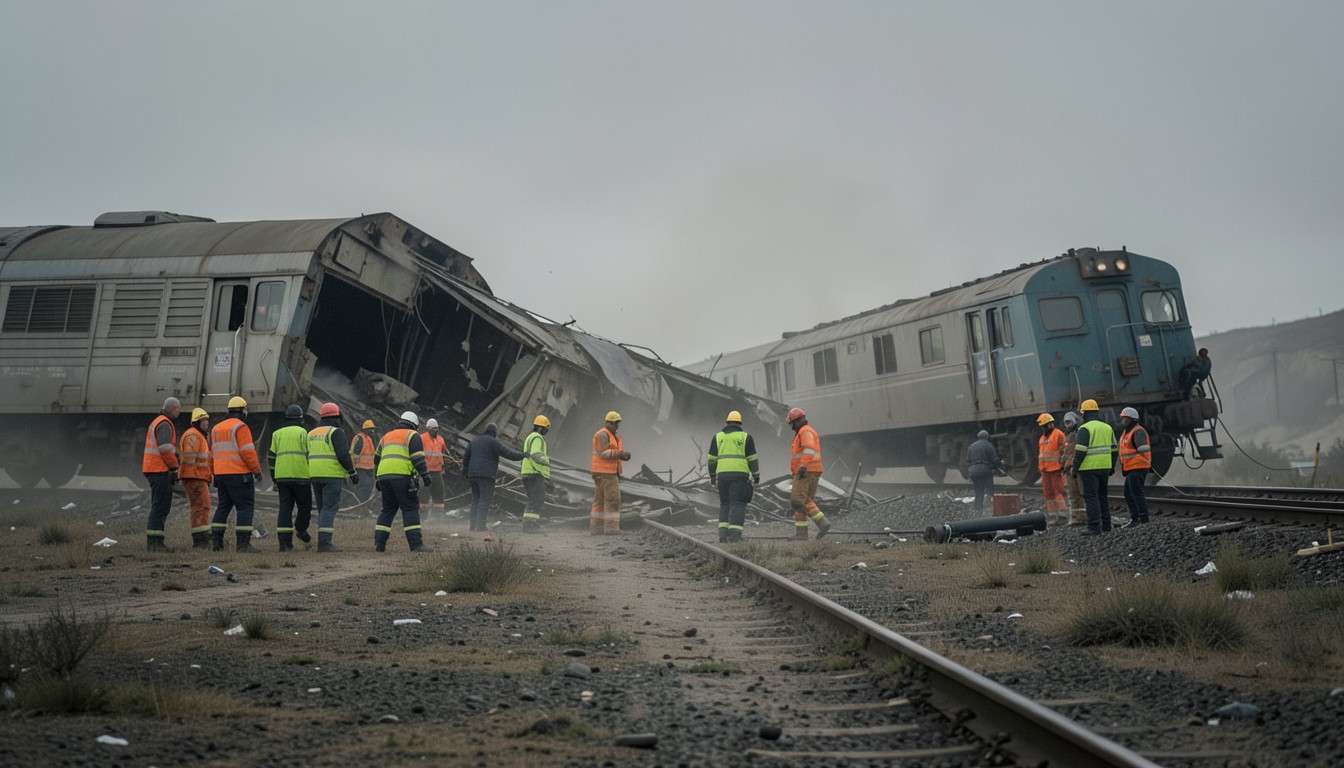
Spain is shaken by a new, terrible railway catastrophe that has marked the history of the country. On Wednesday, October 28, near Toledo, in the center of the country, a violent collision between two trains caused at least 68 fatalities. Initial investigations conducted by the Spanish Ministry of Transport are outlining a picture of technological failures and extremely questionable human decisions.
At the center of the drama is the malfunction of the LZB system, an automated control device that manages the speed and safe distance between convoys. This system, fundamental for passenger safety, suffered a total shutdown that affected six trains in transit in the area, including a high-speed train from the national company Renfe and one from the private operator Iryo.
The fault that paralyzed the network
The problem began around eight-thirty on Wednesday morning. A communication failure struck three network computers, completely disconnecting the LZB system. This technological blackout forced the six trains present in the sector to stop suddenly for safety reasons. In the absence of automated control, traffic management was shifted to manual mode at the Atocha control center in Madrid.
It was during this emergency phase that the event occurred that changed the course of the day. The controller on duty made decisions that the Minister of Transport, Oscar Puente, described as inexplicable. Instead of having the trains proceed at reduced speed, in accordance with safety regulations in the event of a failure, the personnel ordered the convoys to depart again at normal speed.
Human error and the devastating impact
While the Iryo train remained stationary along the line, the Renfe train resumed its journey freely. For approximately twenty-five minutes, the convoy continued its journey until, at eight-fifty-three, it struck the rear of the stationary train with extreme violence. The impact was so powerful that it dragged at least two carriages down a slope, causing their destruction.
Authorities are now investigating to understand why the Iryo train did not restart correctly and why authorization was given to proceed at maximum speed. The LZB system, introduced in Spain in 1992, is currently in a transition phase toward the new European ERTMS standards. The coexistence of old and new technologies on the same line may have played a crucial role in this tragic accident.
That is all for now. From the newsrooms in Nice and Paris, this is am1575news, Francia24 and Radio Centrale Milano.
Source: AudioVisione – AM 1575 News