 By Marco Hugo Barsotti MHB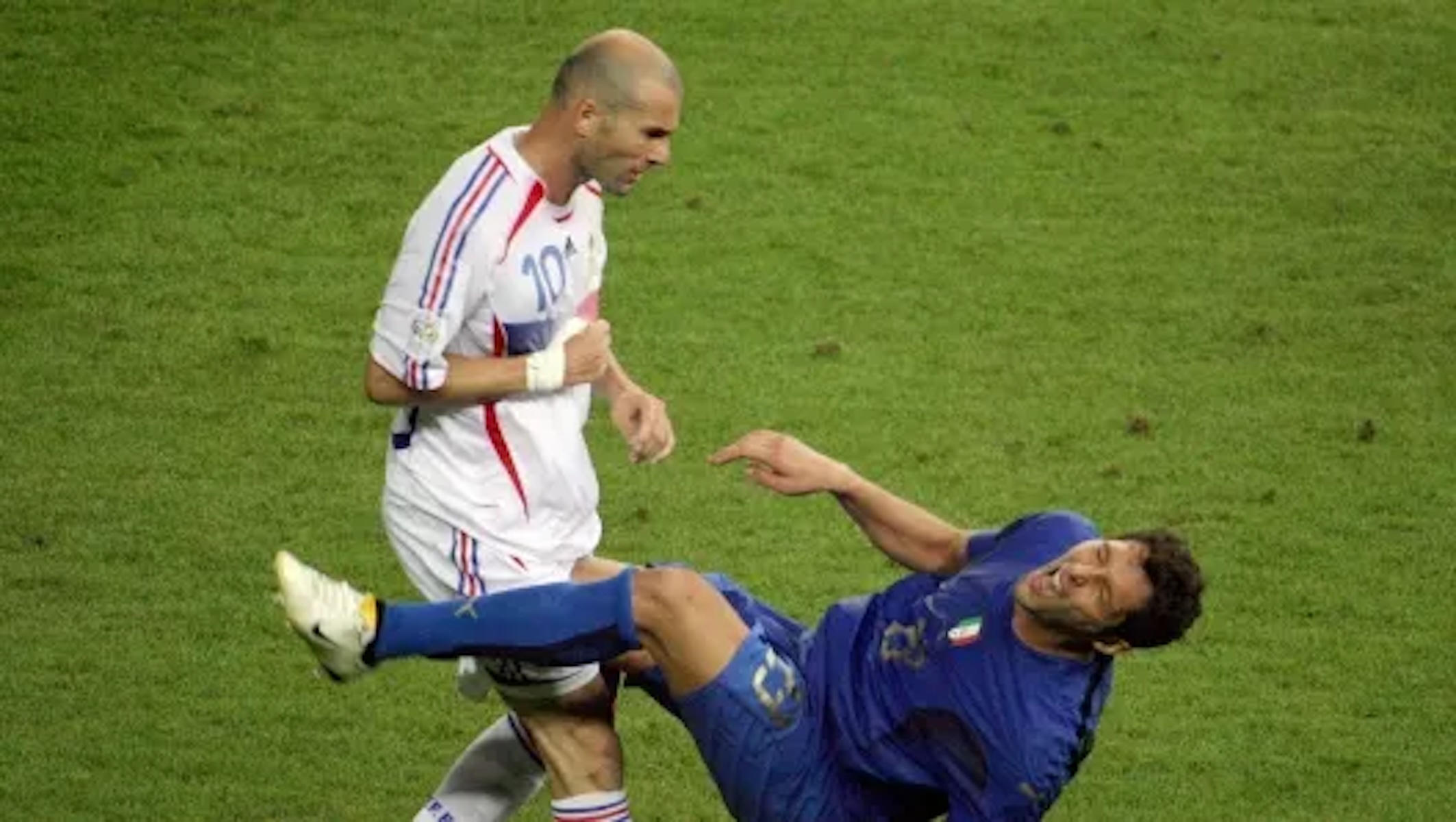
Welcome to am1575news, the news bulletin of Francia24 and Radio Centrale Milano for Friday September 18, 2026 in podcasting, on the medium wave and on franciaoggi.com. In the editorial office in Nice Marco Hugo Barsotti, from Paris Rachel Costa.
News from France
Zinédine Zidane, new head coach of France, unveils the first squad list
Appointed to lead the Blues (the French) in the summer of July, Zinédine Zidane presented on Friday September 18 the first roster of 26 players for the first four fixtures of the Nations League 2027 group stage. The announcement, made during the introductory press conference, marks the start of a journey that is set to unfold under the spotlight of as many as 69 million observers, ready to scrutinize every decision of the new coach.
Criticism will not be long in making itself felt, but for Zidane it is merely a backdrop compared to the pressure he already experienced at Real Madrid, where his figure was subjected to unprecedented media coverage.
According to sports historian Paul Dietschy, “Zidane generates enormous expectations, almost like a presidential election: at first he is acclaimed, but then the reality of the results can prove more complex.” The former star adds, “He has always been unanimous; he is a personality who gathers, also thanks to the memory of his role as an unforgettable champion.”
His silent image, described as “mysterious” by Dietschy himself, recalls that of reserved artists and, according to Aurélie Dyèvre, director of Sporsora, “ speaking little fascinates and prevents direct criticism.” Dyèvre also emphasizes that Zidane’s personal story – raised in La Castellane, son of immigrants – makes him a symbol of merit and integration, capable of speaking to an audience that ranges from great stars to grandparents.
In the sports‑marketing landscape, Gary Tribou observes that “Zidane has a multicultural dimension that makes him the icon of all generations; he is a reference point even for teenagers.” Numerous partnerships with brands such as Adidas, Dior and Danone have solidified his international presence, allowing him to remain visible without necessarily having to speak.
Nevertheless, the new coach will also have to face non‑football challenges. The country’s political future, with the upcoming presidential election, could influence the federation’s dynamics and the players, experts warn. The potential impact of a possible victory by the Rassemblement National could put the “Bleus” in a delicate position, given some athletes’ statements against the party.
In summary, Zidane’s popularity, built on the myth of rigor, the 1998 World Cup triumph and his figure as a “man of grace” despite the controversial 2006 gesture, gives him a unique advantage: “When someone is idolised, if they err others blame them; it is not his responsibility,” concludes Tribou. It remains to be seen whether his tactical choices can meet the high expectations of an audience now accustomed to considering him untouchable.
Franceinfo, September 18, 2026
Fact Check by Gemma4.
Police officer from the Yvelines under investigation for suspected preparation of a terrorist act
A 35‑year‑old police officer from the Yvelines departments has been placed under investigation after his termination on Sunday August 23. Authorities confirmed, with TF1/LCI’s verification, that the official is suspected of having prepared a terrorist act.
According to a judicial source, the man has been charged with four offences: individual preparation of a terrorist act; unauthorised manufacture or trade of war material, weapons and ammunition in connection with a terrorist organisation; illegal possession of the same material in relation to a terrorist organisation; and direct provocation of a terrorist act carried out via an online public communication service. He has been placed in pre‑trial detention.
Franceinfo, 09/17/2026
Fact Check by Gemma4.

Editorial by Rachel – When the blue‑vested also open the bomb’s jar
I now read my editorial of the day.
A 35‑year‑old public‑security guard has ended up in the courts for “preparing a terrorist act”. Is this not an isolated case? It all feels a little too convenient: the narrative stops at “suspects” and “clues” without showing us anything tangible. The press, so to speak, has already decided the verdict before they even put a photo on it, as if public opinion had already been conditioned by some pre‑loaded script.
Then we are faced with a list of offences that sounds like a catalogue of a beginner‑arms shop: “unauthorised manufacture or trade of war materials”, “direct provocation via the internet”. Who is the real author of this script? The media have forgotten the fundamental principle of journalism: evidence is better than suspicion, yet it seems evidence has never been sent to the editor who asked for it.
And the “privacy” of the officer’s name? Here the debate takes a fascinating turn: on one side the right to confidentiality is defended, on the other the “terrorist police officer” figure is painted with the intensity of a thriller. Is it a real paradox or just a stunt to keep attention high, feeding suspicion without grounding it in concrete facts? If there really were a threat, wouldn’t it be more effective to let the officer speak in court than to hide him behind the veil of privacy?
Finally, the article ends with the sentence “the gentleman has been placed in provisional detention”, without any reflection on why a public servant should end up in pre‑trial jail. Is our society that good at labeling before understanding, or has news become a big circus where the audience applauds every new “plot twist” without asking whether the circus has already collapsed?
Koan of the day
A monk asked the Master: “If a police officer is suspected of terrorism, is his badge or his shadow more dangerous?”
The Master replied: “The badge is made of iron, but the shadow can pass through newspaper words and insinuate itself into the minds of citizens.”
The monk persisted: “And if the shadow hides behind the veil of privacy, how can we distinguish between innocence and accusation?”
The Master smiled: “When the light of truth is clouded by the veil, the only certainty is that the shadow will keep walking, as long as no one lights the lamp of transparency.”
But let’s return to the news.
Diesel has risen 38% in a year, kerosene 100% but gas has exploded 150%: why this energy suddenly worries all of Europe
Europe, still lagging in rebuilding natural‑gas reserves, now faces record fuel prices while governments try to contain popular discontent and the rise of the far‑right.
The delay in rebuilding gas stocks, combined with near‑record diesel and other refined petroleum product prices, is increasing pressure on governments. In Germany, the eurozone’s leading economy, the AfD won a state election last week with a platform that promises peace with Moscow and the restoration of Russian gas contracts at affordable prices. This electoral shift strengthens pressure on conservative Chancellor Friedrich Merz, who is weighing costly measures to bring fuel prices down.
European gas reserves, intended to act as a buffer against supply and price shocks during winter, are currently at 69 %, below the 85 % five‑year average, according to Gas Infrastructure Europe. Germany and the Netherlands, together holding 35 % of the EU’s storage capacity, report a significant lag, as high energy prices – fueled by tensions linked to the US‑Israel‑initiated conflict with Iran – have discouraged companies from buying and governments from setting national storage targets.
“Every month Europe delays rebuilding its stocks, price pressure intensifies as the winter peak approaches,” commented Jonathan Schroer, strategist at UniCredit.
Compared with the energy‑price peak triggered by Russia’s invasion of Ukraine in 2022, the economic situation today is, in some respects, less critical. Countries have diversified energy sources and a slower labour market has curbed wage growth, helping to tame inflation. However, the European Central Bank raised interest rates last week and warns further hikes may be needed if energy‑price pressures do not ease.
World oil prices have broken $100 (about €87) per barrel due to the renewed Middle‑East conflict. Across the EU, fuel costs have risen 24 % year‑on‑year, diesel up 38 % partly because of Ukrainian attacks on Russian energy infrastructure and kerosene up over 100 %. The gas benchmark trades at €81 per megawatt hour (MWh), a 150 % increase in a year, and Morgan Stanley forecasts it could reach €100/MWh.
“Counting on climate to guarantee supply security is a risky bet,” noted Morgan Stanley analysts.
Other experts highlighted the danger of dwindling storage capacity and persistently high prices. “I can imagine that even in a cold but not extremely harsh winter, stocks will be heavily depleted,” said Jack Sharples of the Oxford Institute of Energy Studies, warning that rebuilding LNG deposits by 2027 through imports could tighten the liquefied natural gas market for several months.
A Bank of Italy research published in June showed that while oil shocks tend to generate short‑term inflation, gas‑related shocks cause more pronounced and persistent effects, influencing the underlying inflation monitored by the ECB. For this reason investors reckon the ECB will need to raise rates another three or four times, slowing economic growth and investment. “My focus is shifting more from oil and fuel prices to gas and electricity,” said Peter Kazimir, member of the ECB’s monetary policy committee.
Economists predict the most vulnerable sectors will be aviation, chemicals, automotive and building materials, while energy companies, utilities and banks could benefit, even as higher rates make credit more expensive for businesses and consumers. BFM TV, September 18, 2026 Fact Check by Gemma4.
Astounding cost of Pope Léon XIV’s visit to France: €27 million
From September 25 to 28 Pope Léon XIV will travel to France for a four‑day apostolic visit, with stops in Paris, Lourdes and Metz. The official meeting will take place at the Élysée, where President Emmanuel Macron will receive him, although the Vatican has rejected some Republic proposals due to the American cardinal’s tight agenda.
According to figures released by the French Bishops’ Conference (CEF), the total budget for the visit amounts to €27 million. Under the 1905 law on the separation of Church and State, the Catholic Church must bear the full cost of the setups, which include stages, giant screens, audio systems, restrooms and security measures for public venues.
Funding comes from donations, patronage, merchandise sales and private sponsorships. Security, however, remains a state responsibility: in Lourdes more than 3 500 police officers, gendarmes and special units of the GIGN and RAID will be deployed to ensure public order. This is the only cost borne by the French taxpayer.
The programme includes, besides the Paris meeting, a visit to the Bakhita Palace, a large mass in the Place de la Concorde in front of about 500 000 faithful, a night‑time prayer in the Grotto of Massabielle at Lourdes, a mass in the sanctuary’s meadow, and private meetings with victims of sexual abuse in the Church, concluding with a celebration at Saint‑Étienne Cathedral in Metz.
Gala, September 18, 2026
Fact Check by Gemma4.
Welcome to the international bulletin from FranceToday and Radio Centrale Milano for Friday September 18, 2026 on FranceToday.com in podcasting and on the Medium Wave at 1575 kHz.
Reporting from Paris is Rachel Costa.
Iran strikes a tanker in the Strait of Hormuz
Iranian security forces announced they launched a missile at a Togolese‑flagged merchant vessel transiting the Strait of Hormuz, a crucial route for global oil trade. The attack, which occurred early in the afternoon, has raised concerns among shipping companies that fear an escalation of hostilities in the region. Iranian authorities framed the operation as a response to alleged violations of national sovereignty, but international observers fear it could disrupt already fragile energy supplies.
The Gulf Cooperation Council condemned the action, calling for a diplomatic solution to avoid further tension in one of the world’s most strategic passages.
Japan raises interest rates to a level not seen in 31 years
The Bank of Japan has decided to raise its benchmark interest rate to 1.25 %, the highest level recorded in the last thirty‑one years. The move, aimed at curbing rising inflation, was met by the market with a modest rebound in Japanese government bonds and an appreciation of the national currency. Economists point to soaring energy prices and wage pressures as the main drivers that pushed the central bank to act more aggressively than previously anticipated.
Authorities warned that further hikes may be needed if inflation does not show signs of slowing in the coming months.
Gas, kerosene and diesel surge in Europe: energy prices soar
According to the latest data, diesel prices have risen 38 % in a year, kerosene up 100 % and natural‑gas costs have jumped 150 %. The dramatic increase is due to a combination of factors: scarcity of European gas supplies, geopolitical tensions that have reduced oil exports and post‑pandemic demand growth. EU member‑state governments are evaluating emergency measures, including suspending some energy taxes and implementing strategic gas reserves to mitigate the crisis.
Analysts warn that if the situation does not stabilise, European businesses and households could face a significant rise in production and living costs in the coming months.
Oil price falls on optimism about Saudi supplies
Global oil markets have recorded a price dip, with Brent falling more than a dollar per barrel, driven by the prospect of increased Saudi exports in the coming weeks. Recent maintenance at Saudi fields has improved supply outlooks, offsetting pressure from Houthi attacks in the Gulf of Aden. Despite the decline, analysts remain cautious, as Asian demand volatility and Middle‑East tensions continue to influence the market.
Energy operators are closely monitoring rebel group attacks, fearing that an intensification could push prices back up quickly.
Bridgewater calls for AI companies to be regulated like systemically important banks
Greg Jensen, investment executive at Bridgewater Associates, has proposed extending financial‑regulation standards to firms that control a significant share of global computing power. According to Jensen, any entity that holds more than 5 % of computing capacity in the United States or worldwide should be subject to stricter oversight, similar to that applied to large banks. The proposal stems from the growing concentration of power in the AI ecosystem, where a few players dominate access to processing resources.
Jensen added that greater transparency and prudential controls could reduce systemic risks linked to potential errors or abuses of advanced technologies.
Jensen Huang announces Nvidia will double AI‑chip sales next year
Nvidia CEO Jensen Huang declared at a recent press conference that the company plans to sell twice as many AI chips by 2027 as it does today. The goal is to support the growing demand for hardware accelerators from sectors such as cloud computing, automotive and scientific research. Huang highlighted how recent innovations in processor architecture deliver higher performance with lower energy consumption, making Nvidia solutions more attractive to large technology firms.
The new production plan should strengthen Nvidia’s position in the global AI‑chip market, competing with Asian rivals and with government initiatives to develop autonomous computing capabilities.
France approves sale of 48 F‑35 fighter jets to Saudi Arabia for $24 billion
The United States government has authorised the sale of forty‑eight next‑generation F‑35 fighter jets to Saudi Arabia, a deal worth $24 billion. The transaction, presented by the Department of Defense, is seen as a signal of strengthened strategic ties between Washington and Riyadh, as well as a response to Saudi requests to modernise its air force. The deal has drawn criticism from some members of Congress, who raised concerns about the use of such weapons in regional conflicts.
The future of the F‑35s, equipped with stealth technology and advanced combat capabilities, is expected to help maintain Saudi Arabia’s air‑superiority amid Persian‑regional tensions.
Weather Paris, Monaco Monte Carlo and Milan for Friday September 18, 2026
Paris – Mild but clear
Morning in Paris awakens with 14 °C, slightly cloudy sky and a light wind of 10 km/h with gusts up to 20 km/h, no trace of rain. Expert Régis Crêpet notes that the sun becomes more present in the afternoon, reaching 22 °C with feels‑like around 23 °C, while the wind stays steady at 10 km/h with gusts of 25 km/h. The sky remains mostly clear, though a few passing clouds may cross the horizon in the evening around 20 °C, with a gentle breeze of 10 km/h. Night drops to 16 °C with almost total calm, light wind of 15 km/h and no risk of precipitation. Throughout the day temperatures range between a low of 13 °C and a high of 22 °C, with modest humidity and a moderate UV index. Overall, the profile is pleasant weather, ideal for a walk along the Seine.
Monaco Monte Carlo – Sunny but variable
Morning in Monaco shows 20 °C with a humid feel of 23 °C, west wind at 10 km/h and gusts of 20 km/h, but the sky stays mostly clear with only slight cloud passages. In the afternoon temperatures quickly rise to 26 °C, feeling intensely hot at 32 °C under a blazing sun, while the wind intensifies to 15 km/h with gusts of 30 km/h and the sky becomes more cloud‑covered. Evening temperature drops to 23 °C, wind 10 km/h with gusts of 25 km/h, yet the sky remains very cloudy and will become more variable towards night. At night there is no precipitation and temperature stabilises around 20 °C, moderate wind of 10 km/h and gusts of 25 km/h. The day’s thermal range varies between 20 °C and 26 °C, with moderate wind and mostly overcast skies by night. A typical Mediterranean coastal climate: warm and uncomfortable but rain‑free.
Milan – Rainy start, calmer afternoon
Morning in Milan is characterised by light rain with 0.7 mm of precipitation, temperature of 18 °C and east wind at 7 km/h with gusts of 15 km/h, feels‑like around 18 °C. Expert Daniele Berlusconi of 3BMeteo observes that rain persists for the first hours but gradually diminishes, shifting to possible showers of 0.5 mm at 08:00 and then disappearing from mid‑morning onward. In the afternoon temperatures rise to 24‑25 °C, the sky clears becoming slightly cloudy, wind remains light from the east at about 6‑8 km/h and gusts lessen. Evening temperature around 24 °C, partly cloudy sky and almost calm north‑north‑east wind at 3‑4 km/h, with no further precipitation. Night sees a return to cooler conditions, 22 °C with light north wind at 3 km/h, ideal for a quiet night. The day’s thermal range varies between 18 °C and 25 °C, with rain limited to the morning and overall variable conditions.
Rachel’s Weather Editorial – Climate is always the culprit
In Paris a maximum temperature of 22 °C is forecast, and experts immediately declare: “climate change!” as if that single extra degree were undeniable proof. But is the real culprit the thermometer or the curve of the graphs? Perhaps it’s just our desire to find a fairy tale to tell every time the sky opens a bit more than usual.
So, what to do? Turn on the TV, wait for the next press conference and listen to forecasters who, armed with a thermometer and a newspaper, turn 22 degrees into an apocalyptic drama. If that’s the case, why don’t they also celebrate the 13 °C low? Maybe because climate change sounds better when it’s “hot” and not when it’s “cool”.
Koan of the day
A monk asked: “What is the true face of time today?”
Zhaozhou replied: “Time is a veil that rises and falls, sometimes it brings rain, sometimes sun.”
The monk replied: “So time is neither rain nor sun, but only change?”
Zhaozhou concluded: “Change is the footstep of sound in the silence of the wind.”
And that’s today’s weather.
Sign-off.
Online, on X and Mastodon, on all smart speakers and on medium wave, this is FranciaOggi with Centrale Milano 1575 kilohertz.