 By Marco Hugo Barsotti MHB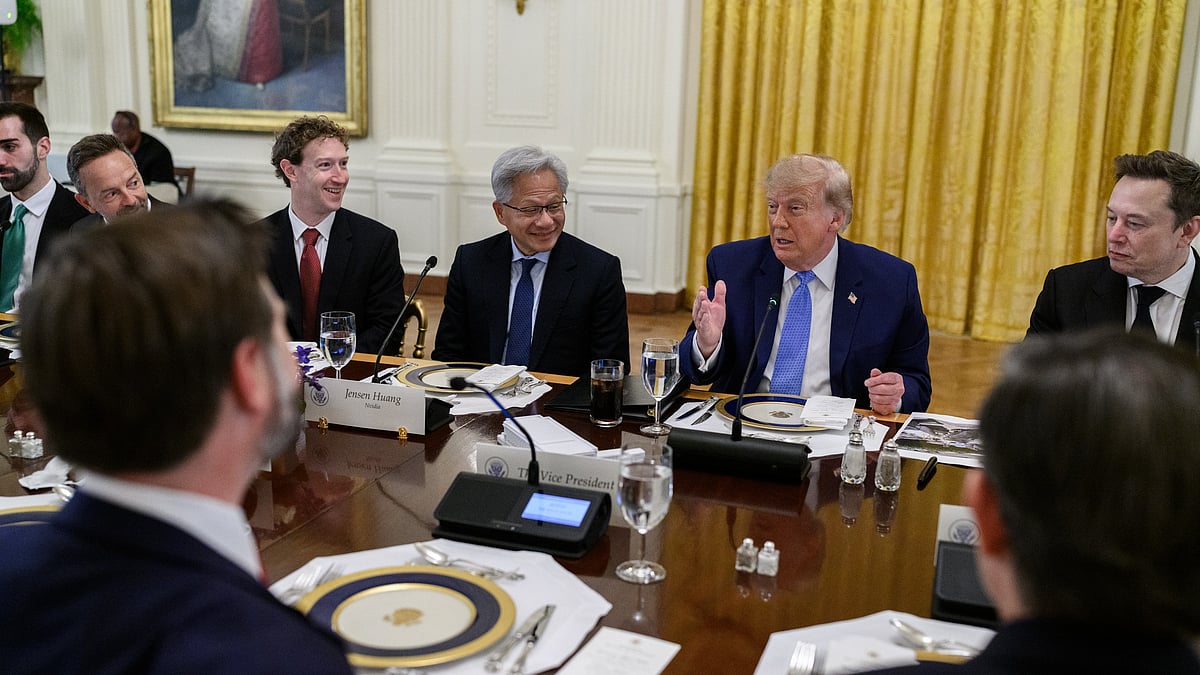
You are listening to a new special from am1575news, France24 and Radio Centrale Milano, in podcasting and on the medium waves.
The context of the meeting
On September 29, 2026 the President of the United States, Donald Trump, convened at the Capitol the heads of the world’s largest technology groups. Facing a growing clamor that demanded a brake or regulation of artificial intelligence, the executives of Google, Anthropic, Meta, OpenAI and SpaceXAI agreed to sign a joint statement. The meeting, held under the auspices of the White House, was described as a historic moment that could reshape the future of AI.
David Sacks’ tweet
Founder and executive David Sacks commented on the event on his X profile, emphasizing that only Trump managed to bring together all the leaders of the chip, data‑center and frontier model sectors. Sacks spoke of a new industrial revolution that has already generated one million jobs and of an infrastructural boost surpassing that of railways, canals and the electric grid. He described the agreement as “preferable to an awaited, but perhaps unattainable, international pact” and reiterated Trump’s commitment to keep the United States at the technological forefront, putting Americans first.
The content of the agreement
The document, drafted in English and translated into Italian, was titled “White House Superintelligence Agreement”. It stipulates that any company that develops and deploys frontier AI models must assume responsibility for ensuring their safety and maintaining public trust. The text provides for the adoption of solid internal processes, continuous monitoring during training and deployment phases, and the timely identification of any anomalies related to cybersecurity, biosecurity or chemical threats.
Key commitments for companies
According to the agreement, the participating companies commit to implementing four levels of verification. First, they must establish rigorous internal controls to monitor model capabilities and ensure they do not violate technical systems or access them in unintended ways. Second, an internal group equipped with the necessary authority to ensure the proper functioning of those controls and to intervene quickly in case of issues is to be formed. Third, companies will collaborate with independent external auditors to assess the effectiveness of the monitoring mechanisms. Finally, an independent board committee will be established, responsible for overseeing the control groups and auditors, with the task of ensuring that every identified problem is resolved.
Future outlook
The agreement provides for periodic meetings among the signatory companies to define common standards and best practices, with the possibility of codifying the measures into broader laws or regulations over time. The signatories expressed the belief that such controls are essential to ensure a safe future, regardless of any regulatory obligations. With the signing of this pact, the technology companies have shown a shared willingness to take responsibility for the safe development of AI, while the United States positions itself as a bastion of innovation and security worldwide.

Rachel’s Editorial – Trump’s miracle: the perfect excuse not to regulate
I will now read you my editorial of the day.
Who would have ever thought that the only politician capable of “regulating” artificial intelligence would do so by delegating responsibility to those who build it? President Donald Trump, in his elegant style as an improvised national hero, convinced the tech giants to sign an agreement that, at first glance, looks like a promise of safety. But isn’t it more convenient to let the companies monitor their own electronic demons rather than rely on genuine democratic oversight?
And while we congratulate this “progressive” step forward, we fail to see the greatest irony: the CEOs of Google, Meta, OpenAI and company sign an honor code that obliges them to monitor themselves internally. It’s a bit like asking the thief to install his own security chain in the house he’s robbing. Is it truly a matter of trust or an elegant taboo to mask the inevitable conflict of interest?
And the media, which have long inundated us with apocalyptic headlines about superintelligence, suddenly turn into apologists of the “AI Industrial Revolution”. Where are the critical voices demanding transparency, where are the questions about a possible “problem‑solving” that evades those responsible? The enthusiasm seems more like a political marketing script than a genuine public debate.
And Brussels, those usual EU philosophers, remain silent, as if this agreement is so obvious that no further comment is needed. “Ça va sans dire”, echoes from the halls of Washington, yet we do not forget that a president’s words do not have the authority of a law, especially when the law is deferred to a CEO meeting under the spotlights. The reality is that security is not signed with a pen, but built with rules that nobody wants to enforce.
Koan of the day
Monk: Master, if companies are required to monitor their own AI models, how can we be sure they don’t hide their flaws?
Master: It is like asking the cat to guard the mouse; trust only arises when the cat agrees not to eat it, but its instinct remains, and the mouse stays uncertain until silence turns into a meow of truth.
Monk: Then, who should be the true guardian of security, if not the very hands that forged the beast?
Master: The ideal custodian is the reflection of those who watch the beast: society as a whole, which does not settle for a dirty mirror, but cleans the surface until its own face appears clear—and, ironcally, realizes that the real danger is believing the game has already been won.
That’s all for now. From the Paris newsroom I’m Rachel Costa: this is am1575news, France24 and Radio Centrale Milano.