 By Marco Hugo Barsotti MHB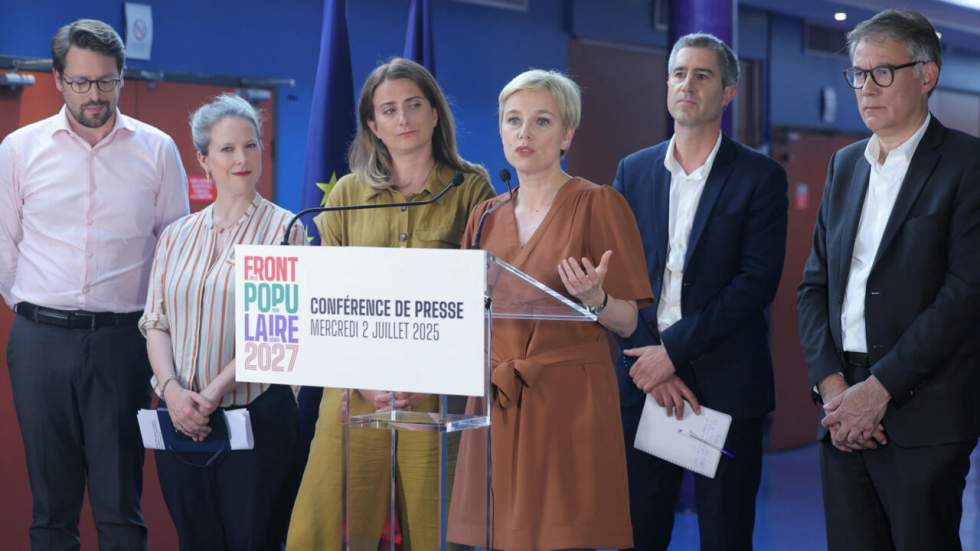
Welcome to the international news bulletin from FranciaOggi and Radio Centrale Milano for Sunday 11 October 2026 on FranciaOggi.com in podcasting and on Medium Waves at 1575 kHz.
From Paris I am Rachel Costa.
The left‑wing primary exceeds 100 thousand voters: the online vote is extended after the cyber attack
The online round of the French left’s primary has surpassed the 100 thousand participant threshold, a result that testifies to the interest of a broad segment of the electorate in the race for the 2027 presidential candidacy. Voting authorities have confirmed that, following the cyber attack that temporarily compromised the voting platform, the election window was extended by two days to guarantee the regularity of operations and the transparency of the process.
The five candidates in the running – Raphaël Glucksmann, Olivier Faure, Ségolène Royal, Jérôme Guedj and Emmanuel Maurel – have intensified their campaigns in the last hours, aiming to consolidate their support bases before the final closure of the vote. Political observers warn that the record participation and the extension of the voting could significantly influence the final outcome, laying the groundwork for a potentially more balanced contest in the next presidential race.
Yandex, Russian tech giant, hit by a drone attack
A swarm of drones was sighted over Yandex’s headquarters in Russia, causing a temporary interruption of its cloud services. Authorities attributed the attack to an unidentified group, raising questions about the vulnerability of Russian digital infrastructure. Yandex, which also operates the country’s largest search engine and numerous online services, said it immediately activated security protocols to restore full operations. The incident comes at a time of increasing tension between Moscow and the West, where Russian tech companies are under pressure to maintain the confidence of international customers.

Rachel’s editorial – Drones in flight and data in flight
I am now reading you my editorial of the day.
It is surprising how those who once defined “cyber attacks” now need drones to make noise. A group of buzzing propellers flies over Yandex’s headquarters and, magically, the digital cloud crumbles. But do we really ask who is behind it? Or do we settle for an “unidentified shadow” that sounds more mysterious than a spying accusation?
Authorities, with their usual readiness to give generic names, have already pointed the finger at “an unidentified group”. It’s a bit like saying the pizza is good because “something tasty made it”. Here the lack of details is almost an art: the more we know, the more the public awaits an improbable Hollywood‑style plot twist.
Journalists, evidently, have forgotten that the tension between Moscow and the West is already a dish served. It’s almost comic how, with every new threat, the narrative turns into a “how Russian companies are reacting” story. Instead of asking whether the real danger is technical vulnerability, they prefer to paint a picture of “international customer confidence” that sounds more like a marketing dream than reality.
In the end, we find ourselves watching drones whizzing over servers and wondering whether Yandex’s response – certifying that security protocols have been activated – is more a technical answer or simply a way to buy time. The real drama? It is not the attack, but our ability to distinguish between a cyber‑warfare drama and a screenplay ready for the next binge‑watch.
Koan of the day
A monk asked the Master: “If drones fly over a company’s digital heart, is it the sky or the earth that betrays security?”
The Master replied: “The drone knows no borders; the true betrayer is the one who, from above, does not see the bridge that connects the sky to the ground.”
The monk, more curious, insisted: “Then, is the invisibility of the group that launched the drones proof that the enemy is inside or outside?”
The Master smiled and said: “The enemy is always behind the door we do not open; the key is the curiosity that never ceases to ask why the door is closed.”
But let’s return to the news.
The Kurils: an archipelago at the centre of a dispute between Russia and Japan
The long‑standing conflict between Russia and Japan has flared around the Kuril Islands, territories seized by the USSR at the end of World II and still claimed by Tokyo. Russian authorities have increased military presence on the archipelago, while the Japanese government has again demanded the return of the four islands north of Hokkaido. International observers fear that the escalation could jeopardise stability in the northern Pacific region, especially amid growing naval activity by both powers.
The European Union is considering halving imports of Chinese hybrid cars
The European Commission is studying a series of measures aimed at reducing by fifty percent the hybrid cars coming from China. The initiative stems from concerns over the trade deficit and technological dependence on critical components produced in Beijing. If approved, the regulation would impose new tariffs and certification requirements for imported vehicles, pushing European automakers to invest more in local production of batteries and hybrid systems. Analysts predict the measure could boost employment in the European automotive sector, but also raise prices for consumers.
Electrifying salaries in the United States: data‑center technicians earn up to $300,000
The exponential growth of AI‑dedicated data centres has generated strong demand for highly specialised electricians. In the United States, professionals who install and maintain the electrical infrastructure of these centres can earn annual compensation exceeding $300,000, a level comparable to Wall Street bankers. Tech companies are offering complex remuneration packages, including bonuses, stock options and benefits to retain talent. This phenomenon highlights the structural impact of AI on the labour market, with new emerging professions and a reevaluation of traditional skills.
terrorist attack at Riyadh airport kills dozens
An explosion hit Riyadh International Airport, killing more than twelve people and injuring over three hundred. Saudi authorities blamed the attack on the Iran‑backed Houthi rebels, although the latter have not yet commented. The event temporarily halted international flights and prompted security forces to strengthen protection measures at major Middle Eastern air hubs. Geopolitical experts warn of a possible increase in regional tension, already marked by armed conflicts and geopolitical rivalries.
Artificial intelligence and the art market: the “human prize” for machine‑generated works emerges
In the contemporary art scene, a new trend sees collectors willing to pay an additional prize for works created entirely by algorithms. Analysts note that proof of human authenticity is becoming a differentiating factor in the digital art market, where AI‑generated creations are increasingly sophisticated. Galleries and auction houses have begun to require certifications attesting to the involvement of a human artist, in order to preserve the perception of originality and cultural value. The phenomenon raises ethical questions about the role of the artist and the intellectual property of artificial works.
Putin conveys a war proposal in Iran to Trump
The Kremlin has stated that Russian President Vladimir Putin transmitted to Donald Trump, then President of the United States, a proposal for military action against Iran. According to Western sources, the proposal envisaged a coordinated offensive to halt Tehran’s nuclear activities, but was rejected by Washington due to the risk of a large‑scale conflict. The news has reignited debate on Russia‑U.S. cooperation in global security, as well as on possible diplomatic consequences of a potential Russian involvement in a Middle‑East war.
The food‑grocery market prepares to change prices thanks to artificial intelligence
E‑commerce platforms and supermarket chains are experimenting with machine‑learning algorithms to dynamically adjust food product prices. The goal is to optimise sales in real time, taking into account factors such as seasonality, consumer demand and available stock. Retail experts warn that, while the technology can improve efficiency, it could also create uncertainty among customers accustomed to fixed prices. Consumer‑protection authorities are monitoring the deployment of such systems to ensure transparency and fairness in price‑setting processes.
Home GPUs: tech enthusiasts stockpile computing power in their basements
In the AI race, some hobbyists have turned their basements into full‑scale computing labs, installing multiple latest‑generation Nvidia graphics cards. These “wine cellars” boast advanced cooling systems and consume considerable energy volumes, often hooked into domestic electrical installations. Observers note that this phenomenon reflects companies’ difficulty in accessing sufficient compute resources, pushing individuals to create DIY solutions. However, energy authorities warn of possible risks to grid stability, especially in areas with more fragile infrastructure.
Weather Paris, Monaco Monte Carlo and Milan for Sunday 11 October 2026
Paris – Cloudy sky but no rain
In the Parisian morning the sky is very cloudy and temperatures hover around 13 °C, feeling like 11 °C, with a light wind of 10 km/h and gusts up to 25 km/h.
The sun tries to break through at noon, but stays under the clouds, temperature rises to 15 °C and the wind remains calm, around 10 km/h.
In the afternoon temperature reaches 17 °C, the sky remains variable and no rain risk is forecast, ventilation is light.
Evening drops to 15 °C, the sky is still very cloudy, gusts reduce to 10 km/h and perceived humidity is stable.
During the night temperature falls to 11 °C, wind is calm and there is no precipitation.
According to expert Régis Crêpet, the situation is typical of a rainy autumn without rain.
Monaco Monte Carlo – Sun and Mediterranean breeze
In the morning in Monaco the sky is slightly cloudy, temperatures are between 21 and 23 °C, feeling like 23 °C because of humidity, and the wind is calm but with gusts of 15 km/h.
Mid‑morning the sun becomes more present, temperature rises to 23 °C, wind slightly stronger at 10 km/h, and no rain is expected.
Afternoon heat stays around 20 °C, the sky becomes more variable and wind gusts reach 15 km/h.
Evening the sky becomes very cloudy, temperature drops to 18 °C, and wind conditions remain moderate.
During the night the climate is fresh at 18 °C, wind is light and no precipitation is recorded.
The Mediterranean air gives a late‑summer feeling, but it is only October.
Milan – Mostly slightly cloudy skies
In the Milan morning temperature is 16 °C, the sky is slightly cloudy, wind is weak from the east, about 2 km/h, and there is no precipitation.
Around noon clouds increase slightly, temperature rises to 19 °C, wind is 4 km/h from east‑southeast.
Afternoon temperature reaches 22 °C, clouds are scattered, wind remains weak, around 4 km/h, and the sky stays clear.
Late afternoon temperatures stay around 21 °C, the sky becomes more variable but without rain, wind is still light.
Evening temperature drops to 20 °C, clouds are scattered, wind is 3 km/h towards north‑east, and calm conditions persist.
During the night temperature falls to 19 °C, wind is almost still, and the sky is cloudy but dry.
Expert Daniele Berlusconi of 3BMeteo confirms a mild and stable autumn.
Rachel’s Weather Editorial — Autumn, the new marketing of climate change
Paris records 13 °C in the morning, a typical October freshness.
Monaco reaches 23 °C in the afternoon, a delayed summer that drives headlines crazy.
Milan hits a high of 22 °C, wind 15 km/h, no rain.
And journalists shout about climate change as if it were the first time they see an autumn sun.
In the ’70s Paris saw similar temperatures, without even the word “climate”.
In the ’80s the Ozone Hole was the century’s alarm, now it is only a historical curiosity.
Even today the media manufacture alarms to sell more copies, while readers flee to digital.
The result? Newspapers in crisis, subscribers disappearing, but headlines becoming ever more sensationalist.
Koan of the day
A monk asked: “How’s the weather today in the city?”
Zhaozhou replied: “In Paris dense clouds, in Monaco mild sun, in Milan clear sky.”
The monk responded: “And the wind?”
Zhaozhou concluded: “Light everywhere, but no rain is felt.”
And that’s today’s weather.
Sign-off.
Online, on X and Mastodon, on all smart speakers and on medium wave, this is FranciaOggi with Centrale Milano 1575 kilohertz.