 By Marco Hugo Barsotti MHB

Welcome to am1575news, the news bulletin of France24 and Radio Centrale Milano for Monday 14 September 2026 in podcasting, on the medium wave band and on franciaoggi.com. In the editorial office in Nice Marco Hugo Barsotti, from Paris Rachel Costa.
Our readers and listeners know how important FranceInfo is for us as a source of information from France. The public all‑news network has a format and a clock (technical term designating the audio lay‑out during a typical hour) perfect for many high‑value journalists. There is also a small group of activist journalists, easily recognizable by the topics they cover: always against Israel, always against Trump, often against anything that is not “democratic” in the sense given to the word by decades of left‑wing activism. Usually it is enough to ignore them and select the rest of their output. Impossible today: the whole editorial staff – but perhaps, recalling the days of picket lines, a part of the staff that imposes what the rest must do – has decided to suspend the bulletins following the decision to give a space to a columnist deemed right‑wing. No news from FranceInfo today, and this is why:
News from France
France Inter and FranceInfo on strike for two days: employees refuse to give space to Charles Sapin of Valeurs Actuelles
A trade‑union mobilisation has triggered a two‑day paralysis at Radio France starting Sunday, to protest the entry of Charles Sapin, former journalist at Le Point and now deputy editor of the far‑right weekly Valeurs Actuelles, as a columnist on France Inter. Sapin’s insertion, planned for a short Sunday column, was cancelled; the network’s morning was replaced by music, while the other group stations, FranceInfo and France Culture, were able to broadcast their usual programmes.
Radio France informed listeners that “due to a strike call presented by all representative trade unions, it is not possible to guarantee the full broadcast of the usual programmes”, highlighting the opposition of the CFDT, CGT, FO, SNJ, SUD and UNSA unions. Moreover, the unions have called a rally on Sunday afternoon at 14:00 in front of the Maison de la Radio, Radio France’s headquarters, inviting the public to attend.
Meanwhile, an Op‑Ed published by Le Parisien gathered the signatures of 300 personalities, including Nobel‑prize‑winning writer Annie Ernaux, actresses Julie Gayet,
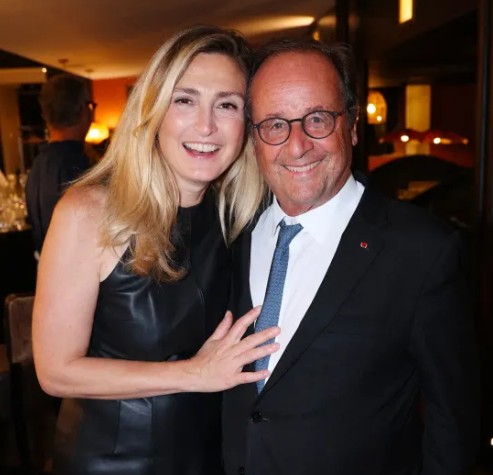
L’attrice Julie Gayet, compagna dell’ex presidente Hollande
Ariane Ascaride and Corinne Masiero, singer Lio, who described Sapin’s appointment as “revolting”. France Inter management justified the choice in the name of pluralism, close to the presidential campaign, despite strong criticism linked to Valeurs Actuelles’ editorial profile and its ties to the Union of Democratic‑Revolutionaries, a party allied with the RN.
The Sunday programme blockage confirms union pressure, which continues to demand the withdrawal of Sapin’s editorial from France Inter’s airwaves. Le Parisien, 13 September 2026
Fact Check by Gemma4.
Oliveir Faure, giusto gelare gli aumenti delle pensioni in quanto “non si è ricchi a 2000 euro al mese”
Olivier Faure, socialist presidential candidate, guest on BFM Politique, said it is not “fair” for pensioners with a €2,000 monthly pension to contribute, because “you are not rich at €2,000”. According to him, a rich retiree is someone who receives at least €4,000 a month, i.e., someone in the wealthiest 10 % of the population.
The socialist leader does not oppose a higher contribution from the more affluent pensions, in particular through the de‑indexation of benefits for the top 10 %. He said he sees no “inconvenients” in acting on those who receive at least €4,000 a month, a threshold different from the one currently discussed by the government.
The context is the consultation launched by Prime Minister Sébastien Lecornu to find savings in the 2027 budget: among the proposals are de‑indexing pensions and abolishing the 10 % tax reduction. A possible €2,000 cap is circulating without definitive decisions, while Faure recalled that this amount already corresponds to the cost of a nursing home in the provinces and is insufficient in Île‑de‑France.

Editoriale di Rachel – Soglie mobili, o l’arte di spostare la linea del ricco
Here we are again discussing who is “rich” enough to have to contribute. Olivier Faure, with the solemnity of someone who has just discovered the geometry of pensions, assures us that €2,000 a month does not make you rich at all. In fact, according to him, that sum barely covers a provincial nursing home. Only at €4,000, he explains, do you enter the exclusive club of the richest 10 %. A threshold that, by pure coincidence, is double the one that circulates in government corridors.
From our newsroom the landscape remains unchanged: no one marching with signs “I’m at €3,999, leave me alone”. Just the usual procession of numbers that swell or shrink depending on who utters them. The prime minister seeks savings, the economy minister talks about justice, and Faure draws a more generous demarcation line, as if wealth were an elastic you pull until it snaps in your favour.
And while everyone delights in moving the meter, the eternal question remains: if we cannot agree on where “too much” begins, how can we ever claim to know where “fair” ends? Thresholds, as we know, are like election promises: the more you move them, the less you recognise them. Ah, France and its shifting borders! Always a marvel.

Koan del giorno
A monk asked Zhaozhou:
“Master, how many coins does one need to become rich?”
Zhaozhou replied:
“When you stop counting them.”
The monk persisted:
“What if I have only two thousand?”
Zhaozhou shook his head:
“Then you are already too busy asking for it.”
Welcome to the international bulletin from FranceToday and Radio Centrale Milano for Monday 14 September 2026 on FranceToday.com in podcasting and on the Medium Wave at 1575 kHz.
From Paris I am Rachel Costa.
Russian air attack on Ukrainian train near the Polish border
A passenger convoy traveling from Surabaya to Banjarmasin was hit by a Russian drone a few kilometres from the Polish border. The explosion caused one carriage to derail, but fortunately there were no fatalities. Ukrainian authorities confirmed that the attack occurred shortly after Boris Johnson and other European representatives passed through the area, sparking controversy over the safety of railway infrastructure in the conflict zone.
Ukrainian forces said the target was part of the strategic transport network, highlighting the vulnerability of rail lines to drone attacks. The incident has reignited international debates about the need for stronger protections for civilians in war zones.
Saudi Arabia shuts East‑West pipeline as a precaution
The Saudi Energy Minister ordered the immediate closure of the pipeline linking Saudi desalination plants to Red Sea refineries, citing the growing threat of armed drones in the Strait of Hormuz. The decision came in response to recent attacks on commercial vessels, which have alarmed Saudi authorities about the security of energy routes.
The move caused an instant rise in oil prices, with markets fearing a prolonged disruption of exports. Energy analysts warn that if the shutdown persists, global stockpiles could come under significant pressure, further heightening tensions between state actors and international oil companies.
President Trump downplays AI‑related risks
During a press conference at Mar‑a‑Lago, former President Donald Trump called the concerns expressed by experts and legislators about artificial‑intelligence dangers “exaggerated”, claiming that “negative forces” are trying to hinder American technological innovation. Trump accused critics of wanting to slow development for political reasons, stating that the USA must not give ground to countries like China.
His remarks sparked mixed reactions: on one hand, some corporate leaders defended the need for tougher regulations, while on the other, market‑freedom advocates welcomed the former president’s more permissive stance. The debate fits into a broader context where U.S. institutions are weighing measures to ensure AI safety without stifling competitiveness.
Himalayan glacier melt threatens India’s water resources
A new report from the World Meteorological Organization notes that Himalayan glaciers are melting faster than previously projected. The phenomenon is attributed to rising average temperatures in the region and a loss of summer snow cover. Scientists warn that diminishing water reserves could jeopardise the water security of over a billion people who depend on rivers fed by glacier melt.
Indian authorities have launched a series of projects to improve water‑resource management, but experts stress that without drastic interventions the crisis could worsen over the coming decades, with repercussions for agriculture and the country’s energy industry.
Oil prices rise after Saudi pipeline closure
The oil market recorded a jump of more than two percentage points following the Saudi announcement to shut the East‑West pipeline. Exchange traders noted an increase in futures contracts demand, driven by worries over a cut in global supply. Bloomberg analysts forecast that tension will persist until clarification on the suspension’s duration is provided.
Asian refineries, most exposed to Gulf supplies, have already begun revising procurement plans, seeking alternative suppliers in North America and West Africa. Meanwhile, airlines have flagged a potential impact on fuel costs, a key profitability factor for the sector.
U.S. Treasury yields near 5 %
The bond market saw ten‑year Treasury yields climb to around 4.9 %, approaching the critical 5 % threshold. The rise was fueled by the latest inflation data, which showed price persistence above the Federal Reserve’s targets. Investors fear the central bank may be forced to keep interest rates higher for longer.
Equity market reactions were mixed: some tech stocks felt pressure, while commodity‑linked sectors benefited from the anticipation of a stronger dollar. Analysts recommend cautious diversification, underscoring the volatility risk from tighter monetary policy.
Anthropic, OpenAI and Google study a standards body for AI
Three of the main AI players – Anthropic, OpenAI and Google – have started confidential talks to create an international standard‑setting body aimed at ensuring the safety of advanced systems. Discussions, held at a closed conference in Singapore, highlighted a shared willingness to define common rules for releasing extremely powerful language models.
According to internal sources, stakeholders want to set transparency criteria, safety audits and certification requirements before new technologies reach the market. The project, however, faces resistance from more libertarian groups that fear excessive government control. The outcome could shape how AI companies operate globally in the coming years.
Z.ai sees shares tumble after a new $5 billion funding round
AI giant Z.ai closed the market with a loss of over ten percent following the announcement of a new $5 billion financing round, the second major capital raise in just two months. Investors reacted with concern, fearing that the liquidity injection could dilute the value of already over‑valued shares.
The capital will be used to boost the computing infrastructure needed for new language models, but analysts warn that the rapid rise in operating expenses could threaten short‑term profitability. The company reassured shareholders of its commitment to maintain market leadership in AI, yet the move has sparked further debate about funding sustainability in the tech sector.
Meteo Paris, Monaco Monte Carlo and Milan for Monday 14 September 2026
Paris – A mild day with gentle breezes
Morning in Paris starts with a light fog that quickly lifts under the sun, giving way to a predominantly clear sky. Temperatures will have a minimum of 17 °C and may rise to 29 °C in the afternoon, with a thermometer reading 23 °C felt thanks to moderate humidity. The wind will blow gently from the north‑west at 10‑15 km/h, without any significant gusts. No precipitation is forecast for either the morning or the afternoon, guaranteeing a dry and sunny day. Evening will see the sky remain clear, with temperatures around 25 °C and calm wind again. Night will drop to 21 °C, still rain‑free, while the wind will further ease. (Source: expert Régis Crêpet)
Monaco Monte Carlo – Bright sun and light breezes
In the morning Monaco welcomes the new day with a clear sky and temperatures around 21 °C, feeling like 23 °C because of humidity. The sun stays dominant throughout the morning, with a light south‑west breeze at 15 km/h. The afternoon will bring a high of 27 °C, with perceived peaks up to 35 °C under the blazing sun, but without any risk of rain. The wind will become more moderate, staying around 10‑15 km/h. In the evening, the sky will remain partly cloudy but without disturbances, with temperatures falling to 24 °C. At night the temperature will hover around 22 °C, with a light wind and no precipitation. No rain is forecast for the whole day.
Milan – Stable weather and rising temperatures
Milan’s morning begins with a clear or slightly cloudy sky, temperatures of 21 °C and almost no wind from the north‑east. The sun stays dominant all day, pushing temperatures up to 29 °C in the afternoon, with feels‑like values reaching 29‑30 °C. The wind will remain light, ranging between 2‑4 km/h from the south‑west, without gusts over 7 km/h. No precipitation is expected, guaranteeing a completely dry day both morning and evening. In the evening, the sky will stay clear with temperatures around 24‑25 °C and light south‑west breezes. The night will present similar conditions, with temperatures near 21‑22 °C, wind just above 5 km/h and absolutely no rain. (Source: expert Daniele Berlusconi of 3BMeteo)
Rachel’s Weather Editorial – Climate is obviously climate‑change’s fault
Really, it’s always climate change that explains every temperature swing, even when the thermometer reads three‑hundred degrees of heat or a week‑long cold snap in February. We wonder if, when a light rain falls, it isn’t simply the sky shedding a tear for our sadness, yet we are forced to blame some invisible greenhouse gas!
But truly, should we keep shouting “climate change” every time the wind blows a little harder than a desk fan? Perhaps the next step will be to attribute the coffee smell from the corner café to climate change as well. In the end, it’s easier to blame the great global mystery than to admit that sometimes the weather is just… weather.
Koan of the day
A monk asked: “What is the true face of the weather today?”
Zhaozhou replied: “The wind blows, the sun burns, the rain does not fall.”
The monk replied: “Then is it hot or cold?”
Zhaozhou concluded: “Weather is what you perceive, not what you predict.”
And that’s today’s weather.
Sign-off.
Online, on X and Mastodon, on all smart speakers and on medium wave, this is FranciaOggi with Centrale Milano 1575 kilohertz.